

A painting disappears somewhere between the old office and the new one. A sculpture gets knocked over at a company event. A client asks why the boardroom's centerpiece looks different than it did last year. In each case, the same question follows almost immediately: whose responsibility was this? Without documentation, that question is often unanswerable — and the absence of an answer tends to matter more, and cost more, than the incident itself.
Why This Question Gets Asked More Than You'd Expect
A handful of moments account for most of these situations: office moves, where art is frequently mislabeled as “decor” and loses track amid the general chaos; events and parties, where higher foot traffic and catering near art both raise risk; renovation or construction work; staff turnover, where someone moves a piece to their new office without any formal record; insurance audits asking for proof of what happened to a specific listed item; and simple executive or board requests for asset accounting that facilities can't immediately answer.
What “Responsible” Actually Means Here
It helps to separate two questions that get bundled together under one word. Operational responsibility is about who was tasked with day-to-day care and oversight — usually facilities. Financial or liability responsibility is about whose budget absorbs the loss, whether insurance covers it, and whether it becomes a disciplinary matter. These aren't the same question, and documentation is what lets an organisation answer both clearly, rather than defaulting to blame or guesswork when something goes wrong.
The Real Cost of Not Knowing
The costs of missing documentation are concrete, not abstract. Insurance claims get denied or reduced without proof of pre-loss condition, value, and ownership. Proper investigation — was this theft, negligence, or a genuine accident — becomes difficult without a timeline to work from. Internal conflict becomes awkward and often unresolvable when nobody can prove what actually happened. And patterns go unnoticed: if a piece in the same corridor keeps getting bumped, nobody connects the dots without a logged history of incidents to look back on.
How Documentation Answers the Question Before It's Asked
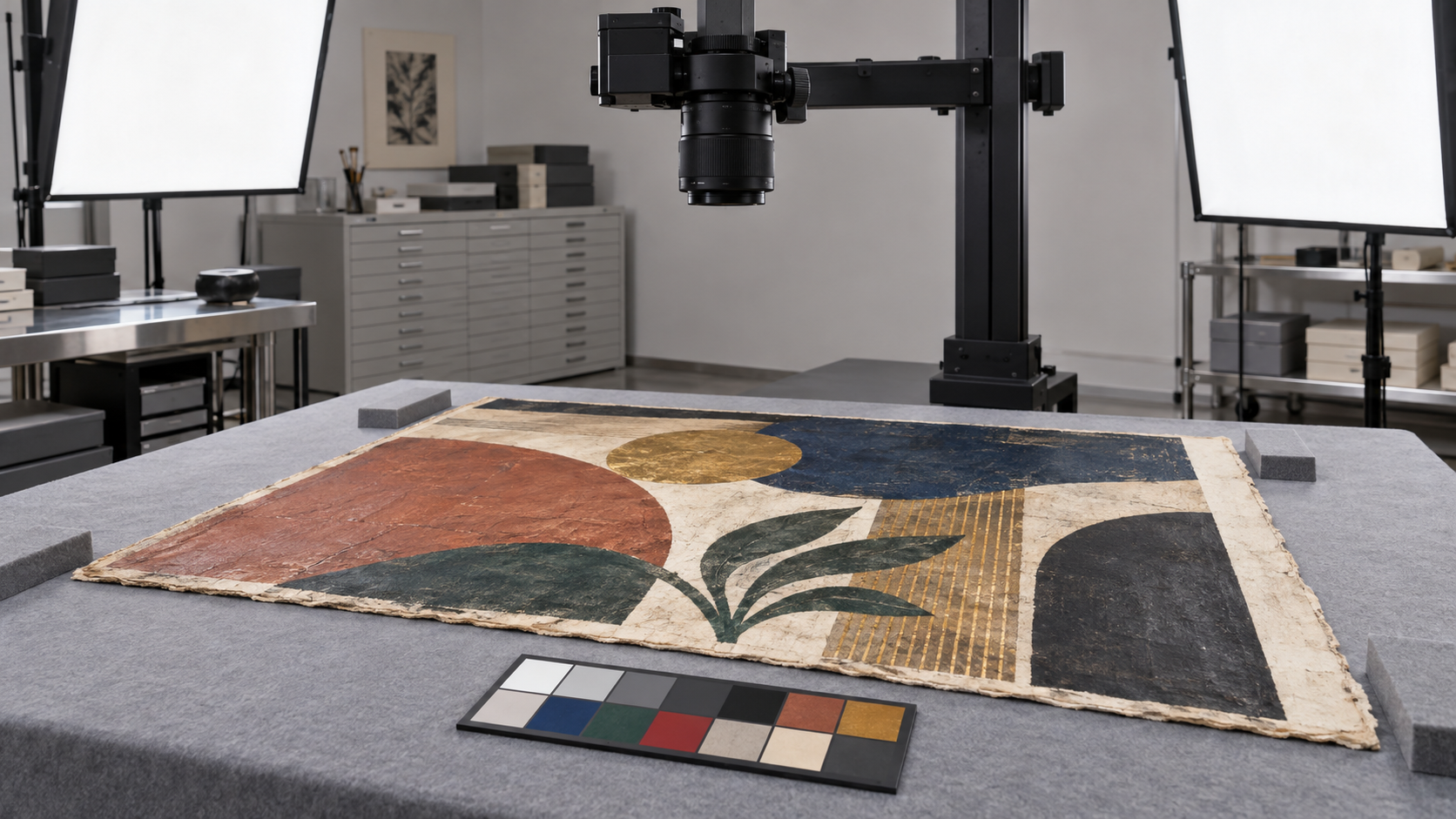
A proper catalog, paired with logged condition checks, creates exactly the evidentiary trail an organisation needs: the last confirmed location and condition of every piece, a photograph history showing condition over time, and — critically during any move — a simple chain-of-custody log recording what left the old space and who received it at the new one, with any discrepancy flagged immediately rather than discovered months later. This turns “nobody knows what happened” into “here's exactly what we can establish, and here's the specific gap, if any.” That distinction matters enormously to an insurer, an investigator, or a board asking hard questions.
A Simple Incident Protocol Worth Having in Place
A short, repeatable process handles most situations well: log any noticed damage or discrepancy immediately, not whenever someone gets around to it; photograph the current state before anything is moved or touched further; note who discovered it and when; compare against the last catalog entry to establish what's known versus unknown; and escalate promptly to whoever owns the insurance relationship and, for valuable pieces, a conservator — rather than letting internal discussion delay the response.
This Isn't About Assigning Blame
It's worth being explicit about the goal here: this isn't about building a paper trail to punish someone. It's about protecting the organisation's ability to recover — through insurance, replacement, or repair — and protecting individual staff from unfair blame when the actual record shows they weren't at fault. Good documentation protects everyone involved, facilities staff very much included.
How Turmeric Earth Helps
Our cataloging and condition-documentation work gives exactly this kind of evidentiary foundation before anything goes wrong. We also assist after an incident has occurred — documenting current condition for an insurance claim, or helping establish what can and can't be determined from the existing record.
Learn more about our cataloging process → turmericearth.com/art-cataloging
The office collections that handle these moments smoothly aren't the ones that never have an incident — every collection eventually does. They're the ones that had a record and a protocol in place before they needed either.
Frequently Asked Questions
A few questions we hear often on this topic:
Q: What should we do immediately if a piece is found damaged?
Photograph the current state before touching anything further, note who found it and when, compare against your last catalog entry, and escalate to your insurance contact and, if needed, a conservator promptly.
Q: Is facilities legally liable if art goes missing?
Liability depends on the specific circumstances and your organisation's policies — but documentation is what determines whether that question can even be properly assessed, rather than defaulting to assumption.
Q: Does insurance cover art that was never formally valued or cataloged?
It depends on your policy, but claims are significantly harder to support without documentation of the piece's existence, condition, and value before the loss.
Q: How do we handle a piece an employee moved to their own office without approval?
Update the catalog to reflect the new location as soon as it's discovered, and use it as a prompt to reinforce a simple rule going forward: any relocation gets logged, however minor it seems.
Q: Does Turmeric Earth help investigate after something has already happened?
Yes — we can document current condition for an insurance claim and help establish what the existing records do and don't show.