

If your office has original artworks on its walls — in the lobby, boardroom, or executive floor — someone in facilities is quietly responsible for them, whether or not it's written into a job description. A proper catalog is the single most useful tool for that responsibility: it turns “we have some paintings around the building” into a documented, insurable, trackable asset register. Here's exactly what a working office art catalog should include, and how to build one without needing an art history degree.
Why This Isn't Just “Nice to Have” for Facilities Teams
Most office art collections accumulate the same way: a piece bought for the new lobby a decade ago, a few gifted by a departing chairman, one picked up at a charity auction, another nobody quite remembers acquiring. Rarely is there a single, current record of what the company actually owns.
That gap becomes a real problem at predictable moments. An office move or renovation, where art gets packed, relocated, and occasionally lost track of. A staff transition, where the one person who “just knew” where everything came from leaves the company. An insurance claim after water damage or theft, where the insurer asks for documentation that doesn't exist. An executive request — “what's that painting in the boardroom, and what's it worth?” — that facilities has no good answer to.
Picture a common scenario: the office relocates to a new building, and in the scramble, three pieces from the old boardroom never make it onto the movers' list as “art” — they're logged as “miscellaneous decor” along with the plants. Without a catalog tying each piece to a reference ID, nobody notices until someone asks where the retirement gift painting went.
A catalog doesn't prevent every one of these situations, but it means facilities isn't starting from zero when one happens.
Before You Start: What “Cataloging” Actually Means for an Office Collection
It helps to be clear about what cataloging is, and isn't. Cataloging is identification and documentation — recording what a piece is, where it came from, where it currently lives, and what condition it's in. It is not valuation, which is a separate, specialised exercise in determining what a piece is worth (and one best done by a credentialed valuer, not estimated internally).
For most office collections, a genuinely useful catalog doesn't need to start elaborate. Even a well-structured spreadsheet, consistently maintained, is dramatically better than the informal knowledge of whoever's been in facilities longest. The goal at this stage is completeness and consistency, not sophistication — you can always upgrade the system later; you can't easily reconstruct information nobody recorded.
The Checklist: What to Record for Every Piece
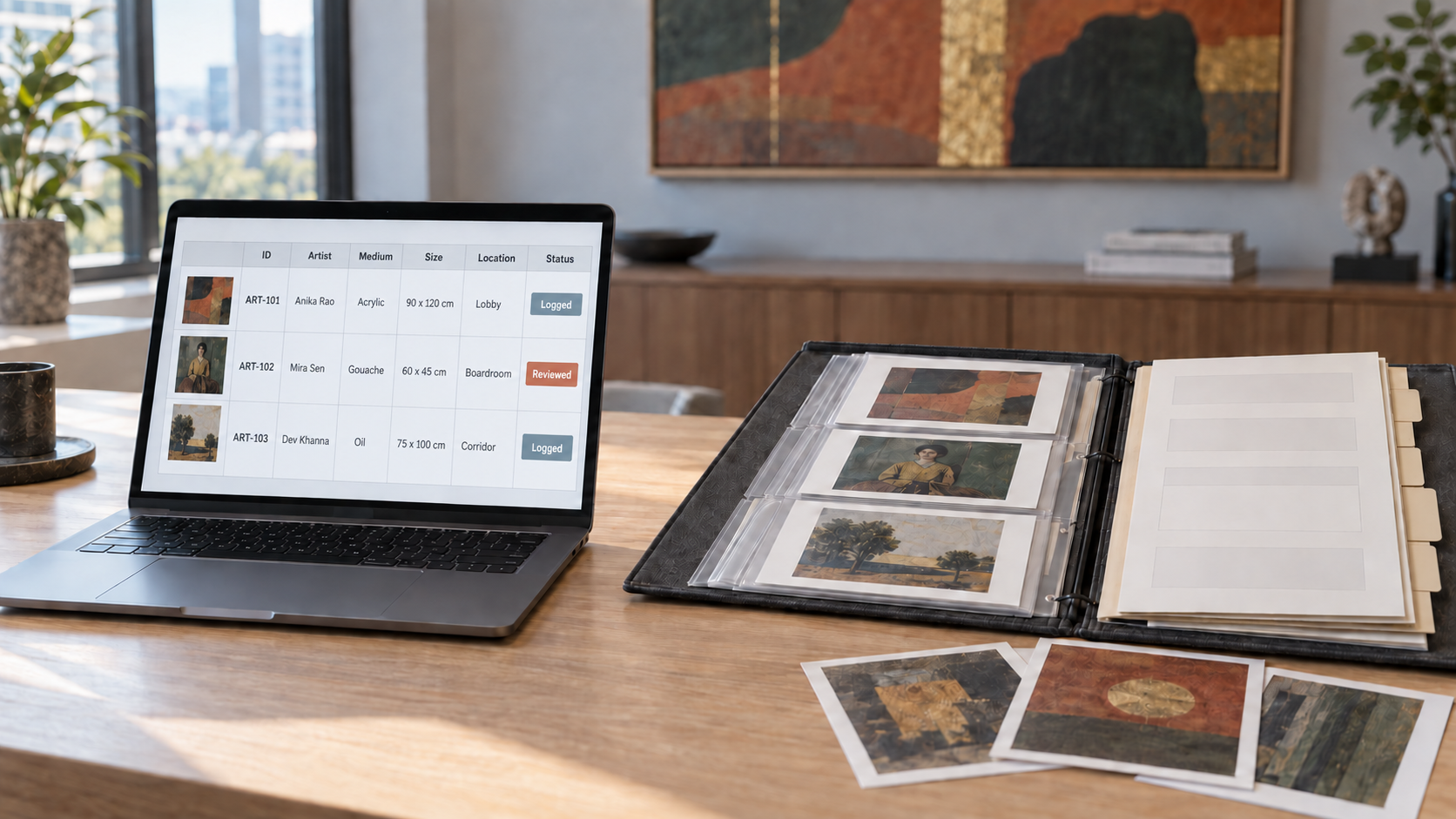
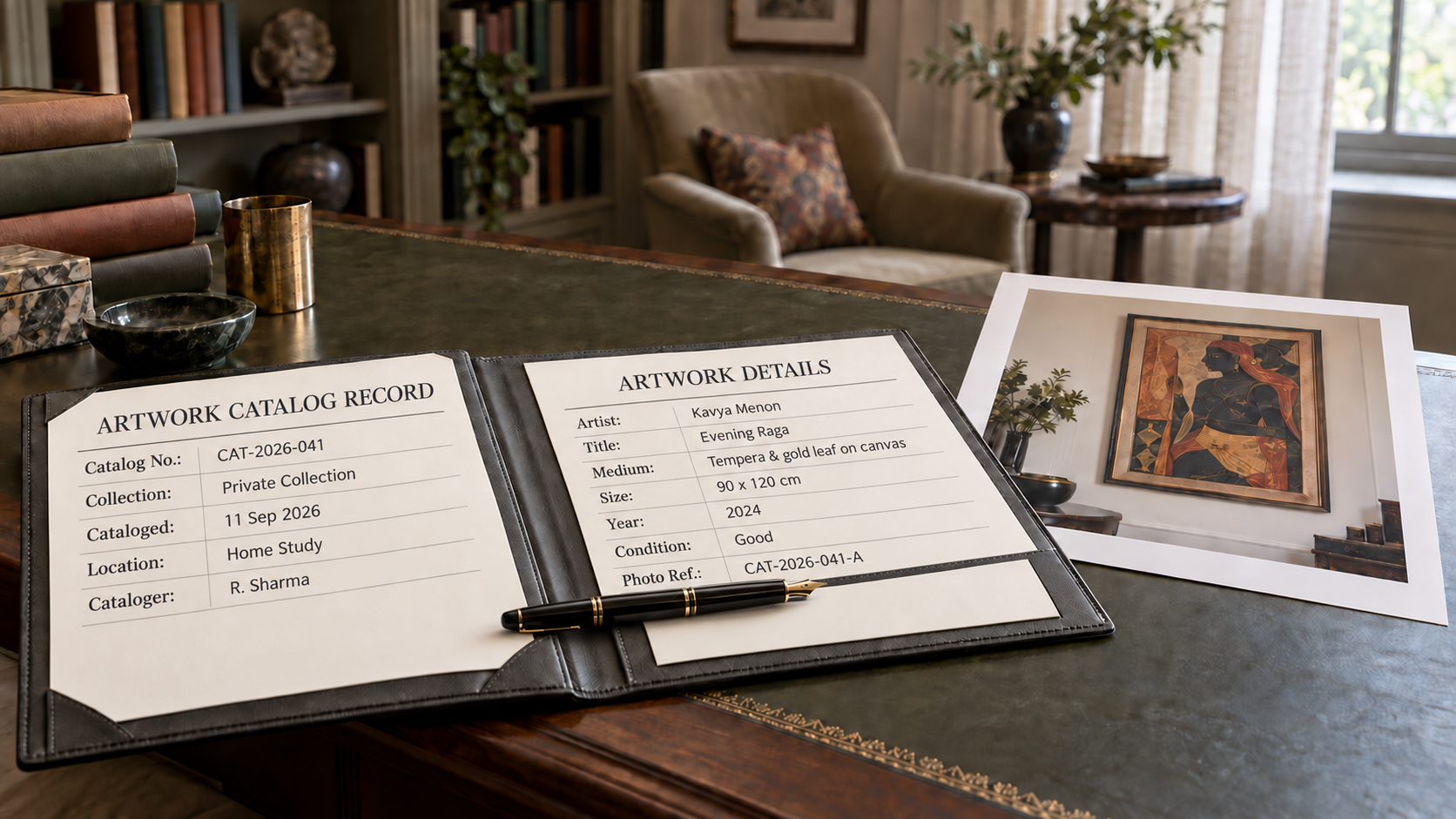
At minimum, each entry in your catalog should capture:
- Artist or maker, if known — “unknown” is a valid, honest entry
- Title or working description of the piece
- Medium (oil on canvas, print, sculpture, etc.) and approximate dimensions
- Approximate acquisition date and source — purchase, gift, or commission
- Current location — building, floor, and room
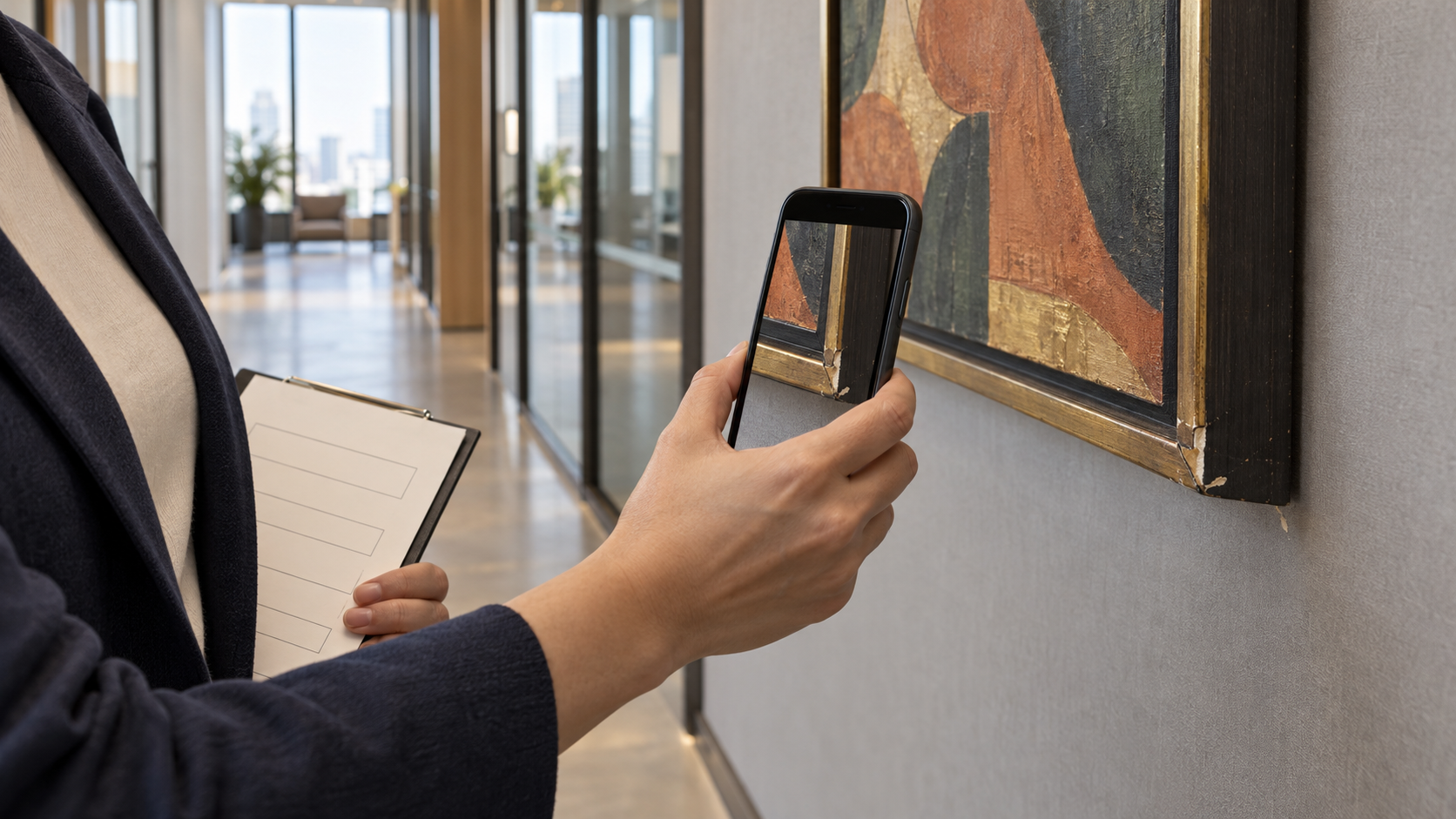
- Condition notes at the time of cataloging
- A unique reference ID, physically tagged or labelled on or near the piece
- A linked photograph (see below)
- Insurance policy reference, if the piece is separately covered
- Assigned or estimated value, if one exists — otherwise leave blank rather than guess
These fields aren't arbitrary — each one answers a real question someone will eventually ask: an insurer confirming a claim, a new facilities hire trying to orient themselves, or a valuer starting a formal appraisal years later. Skipping a field now usually means reconstructing it under worse circumstances later.
Photography: The One Step Most Offices Skip
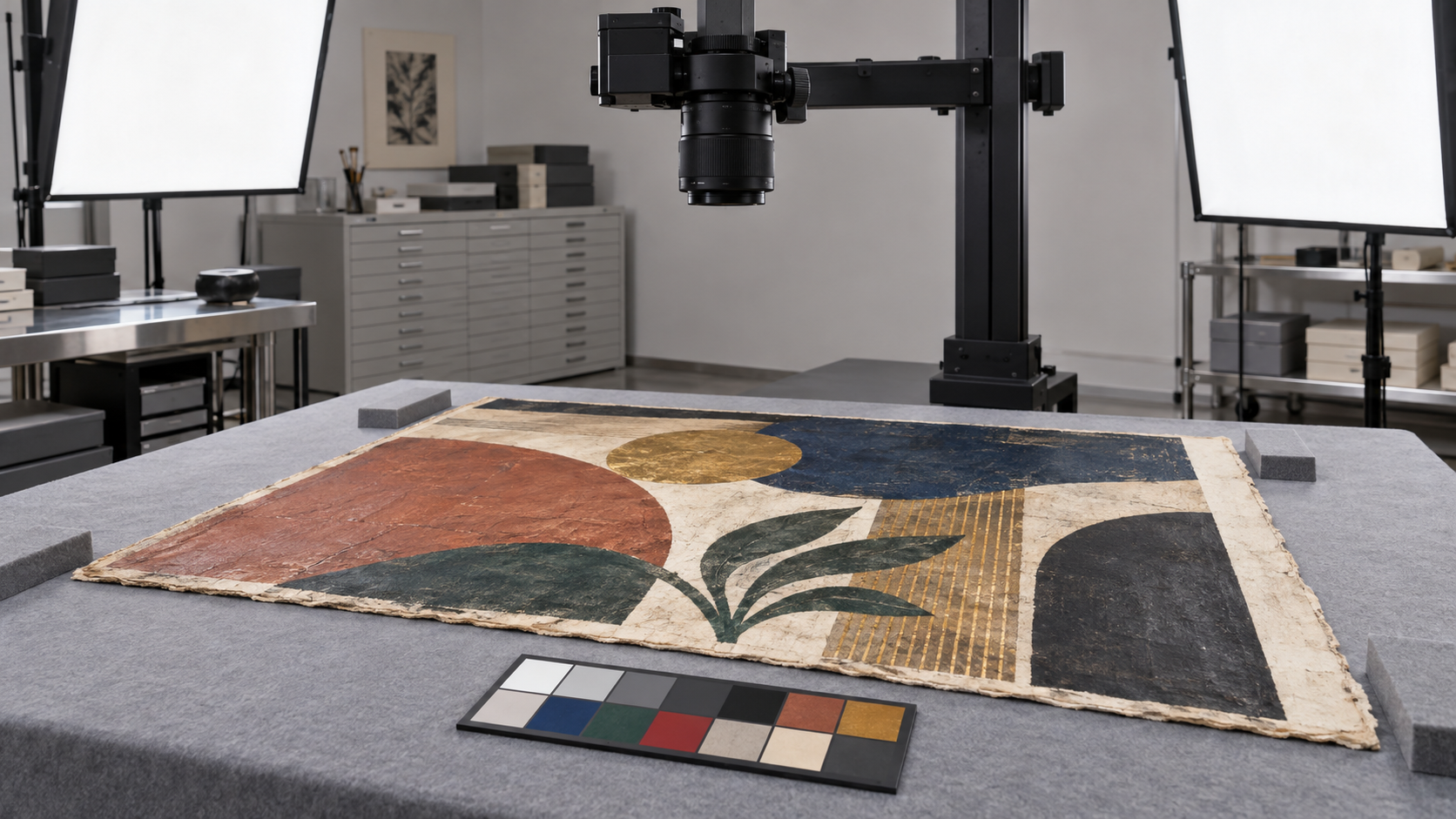
A catalog entry without a photograph is significantly weaker than one with it — for insurance claims, for proving condition before and after any incident, and simply for anyone trying to match a physical piece to its record years later.
A few practical habits make a real difference: photograph each piece in consistent, even lighting; include a full shot and a close-up of any signature, maker's mark, or damage; photograph the back of the piece where labels or inscriptions often live; and name or file each image using the same reference ID as its catalog entry, not a generic filename that will mean nothing in a year. None of this requires professional equipment — a phone camera used consistently beats an expensive one used inconsistently.
Where to Store the Catalog (and Who Should Have Access)
A catalog is only useful if it survives longer than the person who built it. Store it somewhere shared and access-controlled — a company drive or a dedicated system, not a single laptop or personal email — and back it up the same way you'd back up any other business-critical record.
Assign a clear primary owner within facilities, and a named backup, so responsibility doesn't quietly evaporate the next time someone changes roles. This single habit — designating ownership, not just building the spreadsheet — is what most commonly determines whether a catalog stays current or goes stale within a year.
How Often to Update It
Treat these as update triggers, not an annual-only task: any new acquisition or gift, any relocation between rooms, floors, or offices, any damage, repair, or conservation work, and any insurance renewal, which is a natural moment to confirm the catalog still matches reality. Even with no changes at all, a light annual review — confirming every piece is still where the record says it is — catches problems, like a missing piece or a mislabeled location, far earlier than discovering them by accident.
When a Spreadsheet Isn't Enough
A spreadsheet works well for a modest collection in a single location. It starts to strain once a collection grows past a few dozen significant pieces, spans multiple offices or cities, or needs to support something beyond internal tracking — an insurance renewal that wants formal documentation, an audit, or a future valuation exercise that needs clean, complete records to work from.
A useful gut check: if you couldn't confidently answer “how many pieces do we own, and where is each one right now” within five minutes, using only the catalog, the system you have has already outgrown its usefulness. At that point, professional cataloging — structured databases, standardised condition reporting, and photography done to a documentation standard rather than a quick phone snap — earns its cost back the first time it's actually needed, whether that's a claim, a move, or a leadership request for a full asset picture.
How Turmeric Earth Helps
We build exactly this kind of documentation for office and institutional collections — detailed records, professional photography, and condition notes captured to a consistent standard, structured so they hold up for insurance, audits, and any future valuation work. If your facilities team has inherited a collection with little or no documentation, or has simply outgrown a spreadsheet, that's the gap our cataloging service is built to close.
Learn more about our cataloging process → turmericearth.com/art-cataloging
A complete catalog won't happen in an afternoon, and it doesn't need to. Start with what's easiest to document accurately today, assign clear ownership, and build from there — a partially complete, actively maintained catalog is worth far more than a perfect one that never gets started.
Frequently Asked Questions
A few questions we hear often on this topic:
Q: Do I need to know an artwork's value to catalog it?
No. Cataloging documents identity, location, and condition — valuation, which determines what a piece is worth, is a separate exercise best left to a credentialed valuer.
Q: How long does cataloging a mid-sized office collection take?
It depends heavily on collection size and how much is already documented, but a facilities team working through a few dozen pieces alongside normal duties can typically build a solid baseline catalog within a few weeks.
Q: What's the difference between a catalog and an inventory?
In practice the terms are often used interchangeably. Where a distinction is drawn, an inventory is usually a simpler count-and-location list, while a catalog includes richer detail — condition, provenance, photography — for each piece.
Q: Should we use a spreadsheet or dedicated software?
A well-structured spreadsheet is a perfectly good starting point for most office collections. Dedicated cataloging software or a professional service becomes worth considering once the collection is large, spans multiple locations, or needs to support insurance, audit, or valuation work.
Q: Who within the company should own this?
Typically facilities or office administration, since they're closest to the physical collection day to day — with a clearly named backup owner so the responsibility doesn't lapse when someone changes roles.
Q: Does Turmeric Earth catalog office and corporate collections, or only private ones?
Both. Our cataloging process is used for private and estate collections as well as office, institutional, and corporate collections.