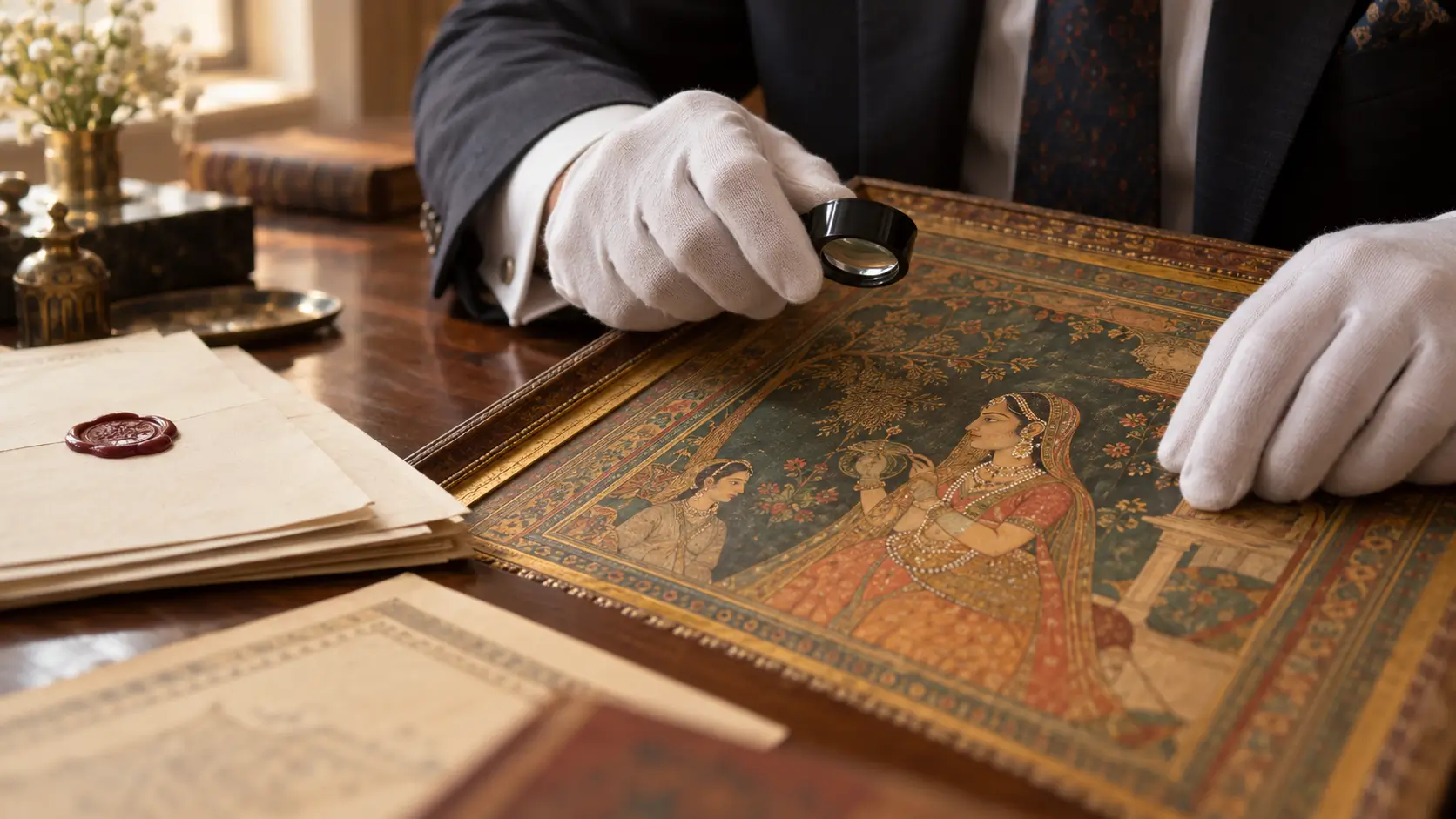


Recommending an art valuer to a client is a trust transaction. If the valuation doesn't hold up later — at claim time, under audit, or in a dispute — that reflects on the broker or consultant who suggested it, not just the valuer who produced it. Yet many brokers vet art valuers far less rigorously than they'd vet any other specialist referral. These are the ten questions worth asking before you put your name behind a recommendation — covering credentials, process, and the practical details that determine whether a valuation actually protects your client.
1. Are you registered specifically for “works of art,” and can you share the registration number?
As we covered in a related piece, art has its own distinct registration category under the Income-Tax Act, 2025 (previously the Wealth Tax Act) — separate from jewellery, plant and machinery, or an IBBI registration under the Companies Act. A valuer who can't immediately produce a specific registration number for the works-of-art category, or who answers with a vague “yes, I'm registered” without naming which credential, is a warning sign. This is the single most important question on this list, and the one most brokers skip.
2. What's your specific experience with this category of art?
Valuation expertise doesn't transfer evenly across categories. A valuer deeply experienced in modern and contemporary Indian paintings may have limited grounding in antiques, tribal art, or sculpture — categories with entirely different market data, authentication challenges, and comparable-sales references. Ask for examples of past work in the specific category your client's collection falls into, not just general art market experience.
3. What market data and comparables will the valuation be based on?
A defensible valuation should reference actual auction results, gallery sales, or documented market transactions for comparable works — not a valuer's general sense of the market. Ask specifically what sources they draw on, and whether that data is India-specific or drawn from international markets that may not translate directly to Indian collector demand for the same artist or period. A valuer who can't name their sources is asking you to take the number on faith.
4. How do you document the physical inspection?
A valuation built on photographs alone is materially weaker than one built on a documented physical inspection — condition, materials, signature verification, and any restoration history all affect value and are difficult to assess remotely. Ask what the inspection process actually involves and what gets documented from it.
5. What's included in the written report?
A one-page value estimate and a full valuation report are very different documents, and only one of them holds up under scrutiny. Ask to see a sample report structure before committing — it should include methodology, comparables referenced, condition notes, photographs, and the valuer's registration details, not just a number.
6. How do you handle authentication concerns?
Valuation and authentication are related but distinct — a valuer should be clear about whether they're also assessing authenticity, referring that question to a separate specialist, or simply valuing the piece as represented. For higher-value or older works, ask directly how authentication risk is handled. An inflated or fraudulent piece valued at face value, with no authentication check along the way, creates real exposure for everyone downstream of that report — the client, the insurer, and the broker who recommended it.
7. What's your turnaround time, and does it change with collection size?
Useful for setting client expectations, and a mismatch here is itself informative — a valuer promising unrealistically fast turnaround for a large or complex collection can be a signal of a rushed, less rigorous process.
8. How do you handle revaluation and updates?
Art values shift, sometimes significantly, and a one-time valuation has a shelf life. Ask whether the valuer offers structured revaluation, what triggers they'd recommend it for — a market shift, a specific number of years, ahead of an insurance renewal — and whether past clients get any continuity in comparing valuations over time rather than starting from scratch each time.
9. Can you provide references from insurers or brokers you've worked with before?
A valuer with genuine insurance-industry experience should be able to point to insurers or brokers they've worked with, not just private collector clients. This is a reasonable, standard due-diligence request, and hesitation here is worth noting.
10. What happens if the valuation is challenged later?
Ask directly whether the valuer stands behind their report if it's later questioned at a claim, an audit, or in a dispute — will they provide clarification, additional documentation, or testimony if needed, and is that included in their fee or a separate cost? A valuer who hasn't thought about this, or who is vague about their role after the report is delivered, is telling you something about how seriously they treat the document's long-term defensibility.
None of This Requires an Art Background
These ten questions don't require any art expertise to ask — they require treating an art valuer selection with the same rigor you'd apply to any other professional referral your firm's reputation rides on. A valuer who answers all ten clearly and specifically, without hedging, is worth trusting with a client's collection. One who bristles at being asked, or answers vaguely, is worth a second opinion before you put your name behind the recommendation.
How Turmeric Earth Helps
We built our valuation process to answer every one of these questions cleanly — registered, credentialed valuers; category-specific expertise; documented physical inspections; market-data-backed reports; and a process designed to hold up under exactly the kind of scrutiny brokers and insurers apply. If you're vetting valuers for a client referral, these are the standards we're happy to be measured against.
Learn more about our valuation process → turmericearth.com/art-valuation
Frequently Asked Questions
A few questions we hear often on this topic:
Q: Is it unusual for a broker to vet an art valuer this closely?
No — it's standard due diligence for any specialist referral that a broker's reputation depends on. Art valuation shouldn't be treated differently just because it's a less familiar category.
Q: What's the biggest red flag on this list?
Inability to name a specific “works of art” registration and number — a vague claim of being “government approved” without that detail is the clearest warning sign.
Q: Should the questions differ for a small collection versus a major one?
The core questions stay the same; for a smaller, lower-value collection, the depth of due diligence — like requesting full references — can reasonably be lighter.
Q: How does Turmeric Earth handle revaluation?
We work with clients to establish a sensible revaluation cadence based on the collection and its purpose — see our related piece on how often art should be revalued.
Q: Can Turmeric Earth provide insurer or broker references?
Yes — we're glad to share our experience working alongside insurance partners on prior valuations.