

In many families, art is more than an asset. It is memory, taste, identity, legacy, and cultural inheritance.
A painting may have been bought by a founder decades ago. A sculpture may have marked the opening of a family office or corporate headquarters. An antique may have been passed down through generations. A collection may have grown slowly across homes, offices, estates, and storage spaces. Over time, these works can become deeply personal.
But when families begin discussing succession, inheritance, estate planning, or division of assets, art can become difficult to handle if it has not been properly documented and valued.
Unlike financial assets, artworks are not always divisible. Unlike listed securities, their value is not visible every day. Unlike real estate, their ownership and location may not always be formally recorded. And unlike many movable assets, their meaning may be emotional as much as financial.
This is why expert-led art valuation is important for family wealth planning.
Why Art Often Becomes Complicated in Succession
Succession conversations are rarely only about numbers. They involve relationships, memories, fairness, legal structures, family expectations, and future stewardship.
Art adds another layer of complexity because families may not always know the current value of what they own. Some works may be important because of market value. Others may be important because of family history. Some may require conservation. Some may need authentication or better provenance records. Some may have been purchased by one generation but claimed emotionally by another.
Without valuation, conversations can become unclear.
One family member may believe a work is highly valuable because of the artist’s name. Another may assume it has only sentimental value. A third may want to retain it, sell it, donate it, or move it into a trust. Advisors may not have enough information to guide the conversation.
A professional valuation creates a reference point. It does not resolve every family decision, but it brings clarity to the discussion.
Art Is a Financial Asset and a Legacy Asset
Art can sit between two worlds.
On one hand, it may be part of a family’s financial wealth. It may need to be considered in estate planning, inheritance, insurance, division of assets, or liquidity planning.
On the other hand, it may be part of the family’s legacy. It may represent a founder’s taste, a patronage history, cultural identity, or a long relationship with artists and institutions.
This dual nature makes valuation important. Families need to understand not only what a work may be worth, but also how it should be documented, preserved, protected, and passed on.
A valuation exercise helps families and advisors identify which works carry significant financial value, which works require special care, and which works may need further documentation before succession decisions are made.
The Role of Wealth Managers and Family Offices
Wealth managers, family offices, asset managers, and estate advisors are often involved in helping families organize succession conversations. They may already help with financial assets, business holdings, real estate, trusts, tax planning, and estate documentation.
Art should be part of this wider asset conversation.
However, advisors do not need to become art experts themselves. Their role is to identify when specialist valuation is needed and ensure that families have reliable information before making decisions.
For example, a family office may recommend valuation when:
- A family collection is being divided among heirs
- A will, trust, or estate plan is being created or updated
- Works are being moved between residences or entities
- A collection has not been valued for many years
- A family is considering sale, donation, or long-term retention
- Insurance values need to be reviewed
- An inherited collection needs documentation
- A family wants to create an archive or legacy plan
In all these situations, expert-led valuation gives advisors a stronger basis for guiding the family.
Why Informal Estimates Are Not Enough
In family wealth conversations, informal estimates can create confusion.
A gallery conversation, old purchase invoice, online search result, or collector memory may provide background, but it cannot replace a proper valuation. Art value depends on several factors, including artist, medium, dimensions, subject matter, period/year where available, rarity, provenance, condition, authenticity, market demand, and comparable references.
Even two works by the same artist may have very different values. A smaller work from an important period may be more valuable than a larger but less significant work. A work with strong provenance may carry greater confidence. A damaged work may need reassessment. An artwork that has not been properly documented may require further research.
For succession planning, families need values that are not casual, emotional, or unsupported. They need values that can be explained and relied upon.
How Expert-Led Valuation Supports Fairer Conversations
Art valuation does not decide how a family should divide assets. That remains a personal, legal, and advisory decision.
But valuation helps create a clearer foundation.
If a collection is being divided, valuation can help families understand whether works are broadly comparable or financially different. If one heir wishes to retain certain works, valuation can support balancing conversations. If a collection is being placed in a trust, valuation helps establish documentation. If works are being donated, sold, or retained, valuation gives the family a better understanding of their options.
This can reduce misunderstanding and prevent future disputes.
It also helps families avoid treating all artworks as equal simply because they are visually present in the same home or collection. Some works may carry much higher market value. Others may carry higher emotional or legacy value. Both dimensions matter, but they should not be confused.
Why AI-Augmented Benchmarking Adds Depth
TurmericEarth offers India’s first expert-led, AI-augmented art valuation service.
This is important for family wealth and succession conversations because families need valuations that are both carefully interpreted and well-benchmarked.
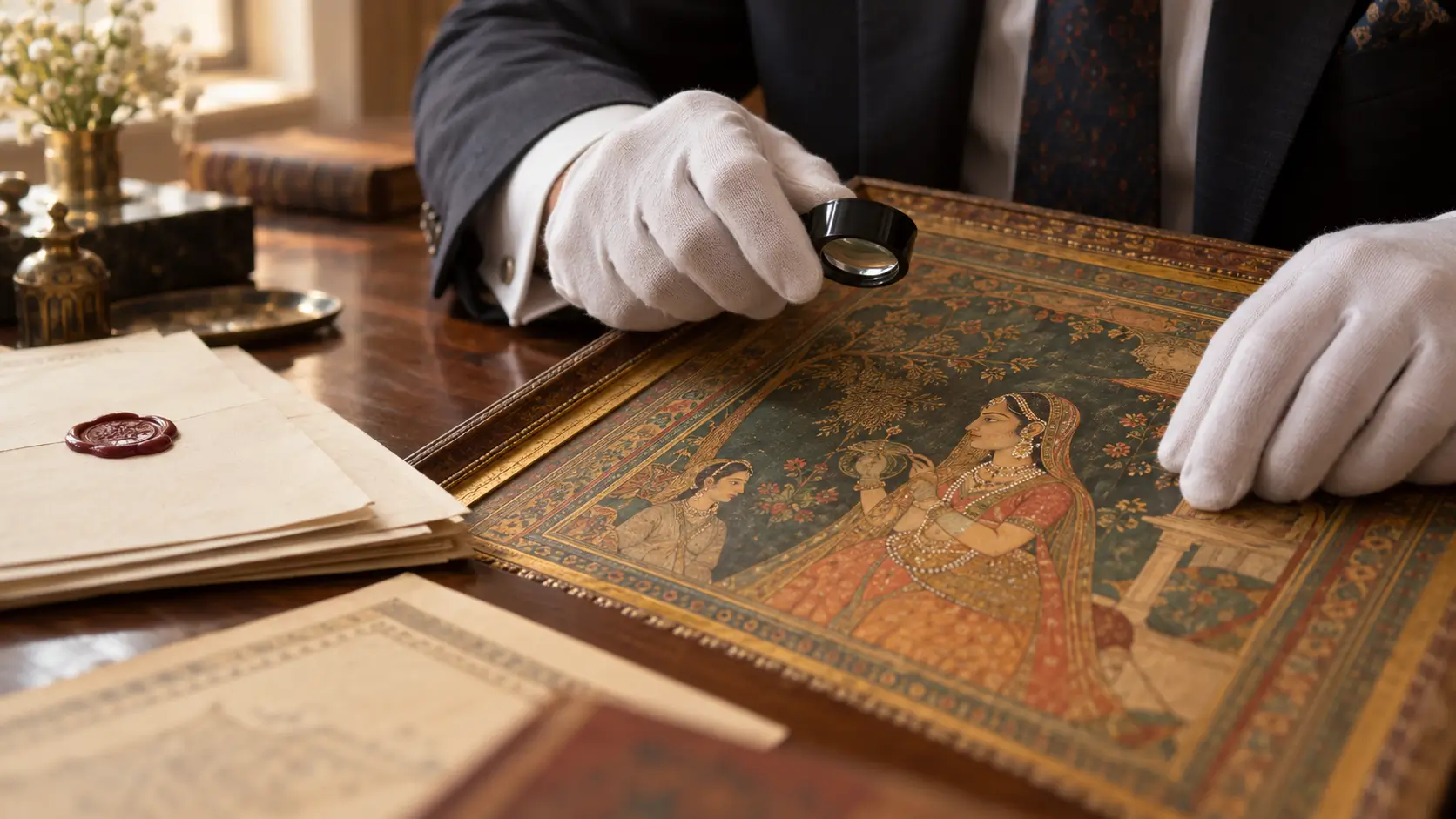
At TurmericEarth, every valuation begins with human expertise. Specialists assess each work through a proprietary internal valuation process developed over 25+ years of working with HNIs, private collectors, family offices, insurers, corporates, institutions, and government bodies.
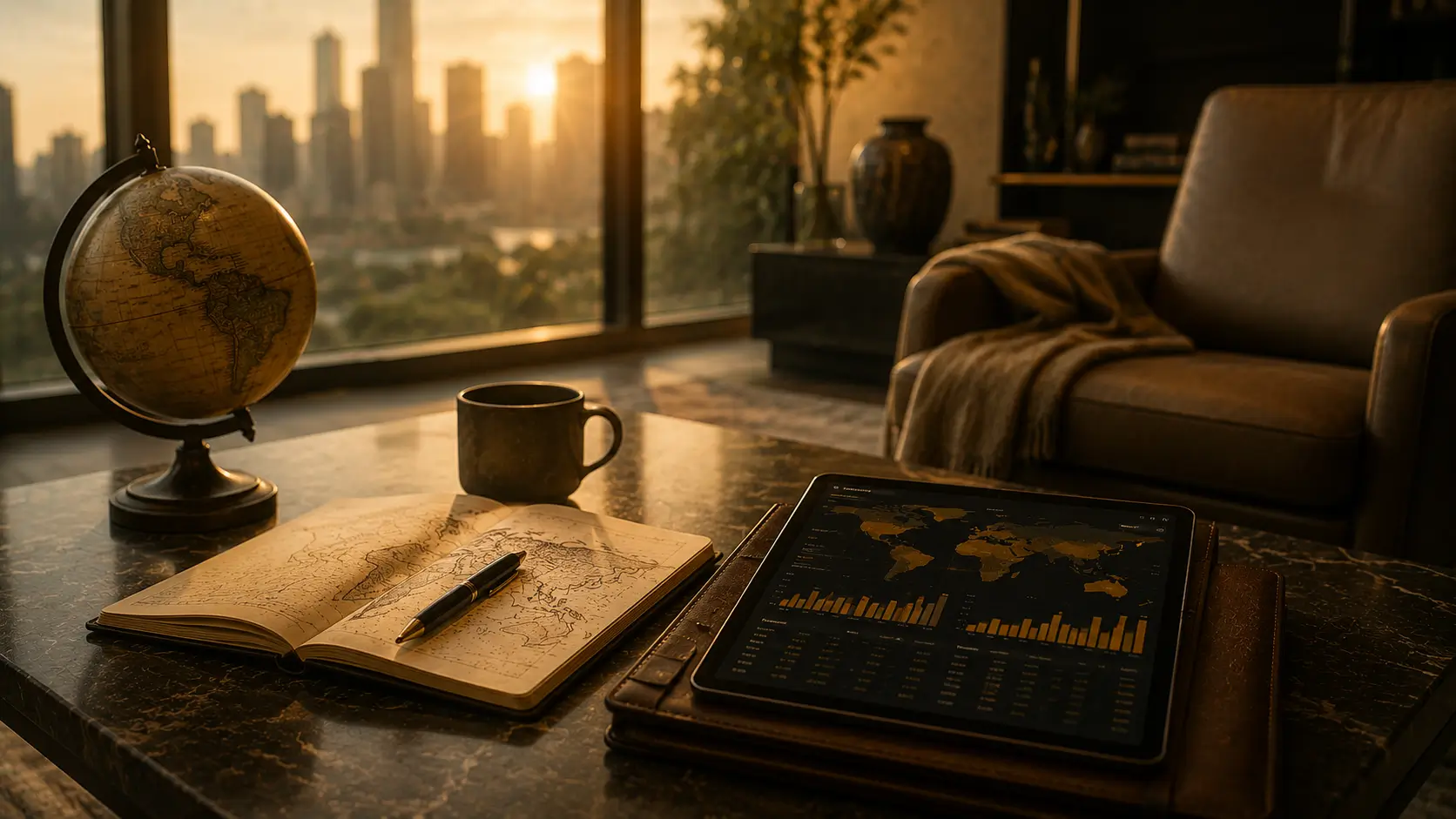
This expert assessment is then strengthened through an internally built AI-augmented benchmarking model. The model cross-verifies relevant valuation parameters against publicly available global market data and wider art-market intelligence.
The final valuation is not AI-generated. AI does not decide the value. It supports benchmarking, research, and validation. The final assessment remains expert-led, expert-reviewed, and certified by TurmericEarth.
For families and advisors, this provides a stronger basis for succession-related discussions because the valuation combines human judgment, proprietary knowledge, and wider market validation.
The Importance of Proprietary Records
TurmericEarth’s valuation process is supported by 30,000+ proprietary artwork records built over 25 years. These records include artist, medium, dimensions, subject matter, period/year where available, and other valuation-relevant parameters.
This matters because family collections are often diverse. They may include modern and contemporary art, paintings, sculptures, works on paper, antiques, artefacts, collectibles, and other cultural assets. Many may have been acquired at different times, under different circumstances, and with different levels of documentation.
A valuation process supported by decades of records gives the assessment deeper context. When combined with AI-augmented benchmarking, it helps create a more robust and carefully reviewed valuation reference.
Documentation Protects the Next Generation
Succession is not only about transferring ownership. It is also about transferring knowledge.
A family may know the story behind a work today, but that knowledge can be lost if it is not documented. Future generations may not know when the work was acquired, who the artist is, why it matters, what condition it is in, whether it has been restored, or what value it holds.
Valuation can become part of a broader documentation effort. It helps families organize information, update records, identify gaps, and make more informed decisions.
For families that care about legacy, this is especially important. A collection should not become a burden for the next generation simply because it was never properly recorded.
When Families Should Consider Art Valuation
Families, wealth managers, and family offices should consider valuation when:
- Creating or updating estate plans
- Preparing inheritance or succession structures
- Dividing assets among family members
- Reviewing HNI or family office portfolios
- Updating insurance coverage
- Planning sale, donation, or trust transfer
- Documenting inherited artworks or antiques
- Consolidating collections across residences
- Preparing a collection archive
- Reviewing works after damage, restoration, or relocation
These moments often require clarity, and valuation helps provide it.
The TurmericEarth Advantage
TurmericEarth is India’s pioneering art valuation company and offers India’s first expert-led, AI-augmented art valuation service.
Its valuation practice combines 25+ years of specialist experience, a proprietary internal valuation process, 30,000+ artwork records, and an internally built AI-augmented benchmarking model.
Across 25+ years of work with insurers, institutions, corporates, government bodies, HNIs, private collectors, and advisors, TurmericEarth’s valuation reports have been trusted and have stood without dispute.
For families, wealth managers, asset managers, and estate advisors, TurmericEarth offers a credible valuation partner for succession, inheritance, documentation, and legacy planning.
Conclusion
Art collections can carry deep emotional meaning within families. But when succession, inheritance, estate planning, or asset division conversations begin, emotional value alone is not enough.
Families need clarity. Advisors need reliable information. The next generation needs proper documentation.
Expert-led art valuation helps bring structure to these conversations. AI-augmented benchmarking strengthens the process by supporting wider market validation while keeping the final judgment in expert hands.
For families that own valuable artworks, antiques, artefacts, sculptures, collectibles, or other cultural assets, valuation is not merely a financial exercise. It is part of responsible legacy stewardship.
To learn more, explore TurmericEarth’s expert-led art valuation services.