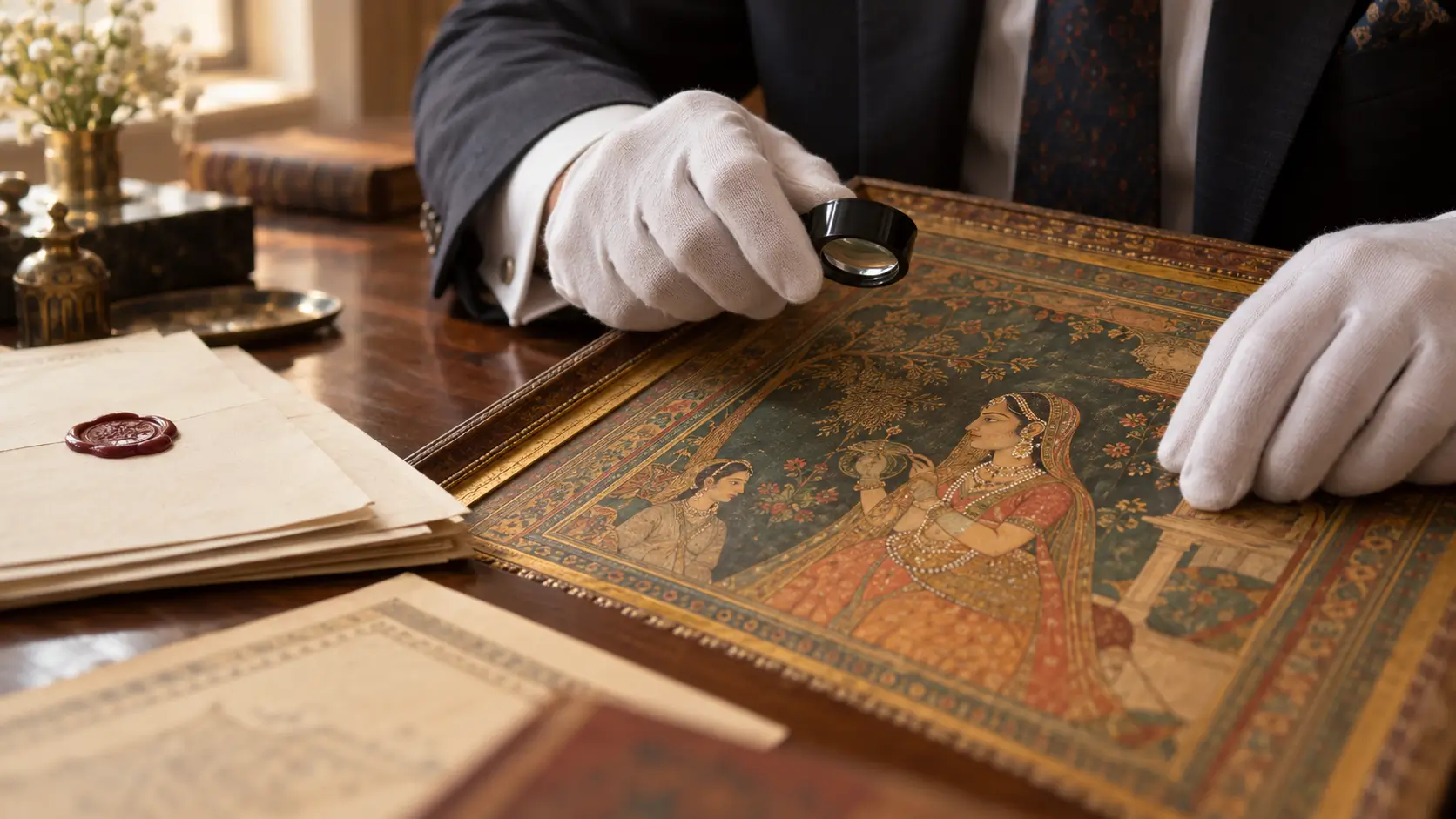


Using art as collateral for a loan is still a niche product in India, offered mainly through private banking relationships and a small number of specialist lenders rather than as a standardised, RBI-notified loan category like gold or securities. That means the valuation behind an art-backed loan works differently from a valuation for insurance or estate purposes — and understanding that difference matters before structuring or recommending one.
Why Art-Backed Lending Is Different From Gold or Securities Loans
Loans against gold and listed securities are relatively standardised products, with Reserve Bank of India guidelines that set loan-to-value (LTV) parameters lenders must operate within — for instance, the LTV framework the RBI applies to gold loans. Art has no equivalent notified framework. There's no RBI-mandated LTV ceiling for art as collateral, no standardised valuation methodology every lender must follow, and no liquid, centralised market comparable to gold or listed securities. Each art-backed loan is, in practice, a bespoke arrangement — negotiated case by case, usually within a private banking or specialist-lender relationship, with the lender setting its own risk parameters.
Why Lenders Value Art Conservatively
Without a standardised market or a regulator-set LTV, lenders compensate by being conservative in two places: the valuation itself, and the proportion of that valuation they're willing to lend against. Compared to an asset like gold — which can be sold quickly, at a transparent, publicly quoted price, in a matter of hours — art can take months to sell at a fair price, and the market for any single work is often thin outside of major names and categories. That illiquidity is the central risk a lender is pricing in, and it's why loan-to-value ratios on art tend to sit meaningfully lower than a lender would offer against gold or securities, even before considering the artwork's own market volatility.
How Lending Valuations Differ From Insurance Valuations
This is the point that trips up teams new to art-backed lending: the same piece can carry two legitimately different numbers depending on why it's being valued. An insurance valuation typically reflects retail replacement value — what it would cost to replace the piece through the market it would normally be bought in. A lending valuation is oriented around a much more conservative question: what could this piece realistically be sold for, within a defined timeframe, if the lender needed to recover the loan. That second number is deliberately lower, and asset managers structuring a loan against a client's collection need to set expectations around this gap early, rather than let a client assume their insurance figure is what a lender will lend against.
What Lenders Look For Before Extending Credit
- A credible, independent valuation — not one commissioned by the borrower's own dealer or gallery, given the conflict of interest
- Clear provenance and title — the lender needs certainty the borrower actually owns the piece outright and can pledge it as collateral
- Liquidity of the specific artist or category — established, actively traded names value and lend more predictably than emerging or thinly-traded ones
- Condition — condition issues affect both value and resale liquidity, so a current condition assessment typically accompanies the valuation
- Physical custody or secure storage arrangements — many lenders require the pledged art to be held in secure, insured storage for the loan's duration
What This Means for Asset Managers and Private Bankers
For teams advising clients on this option, the valuation is doing more work than in most other contexts — it's simultaneously establishing what the collateral is worth, informing how much credit the lender is willing to extend, and setting a benchmark the lender may revisit if market conditions shift materially during the loan term. Bringing in an independent, credentialed valuer early — before approaching a lender — gives clients a clearer, more realistic picture of their borrowing capacity, and avoids the friction of a lender's own valuation coming in meaningfully below client expectations later in the process.
How Turmeric Earth Supports Art-Backed Lending Engagements
We provide independent valuations suitable for lending purposes, structured to the conservative, liquidity-aware standard lenders expect — distinct from, and clearly labelled apart from, any valuation we provide for insurance or estate purposes for the same client.
Learn more about our valuation process → turmericearth.com/art-valuation
Art-backed lending is likely to keep growing in India as more collectors look to their collections as a source of liquidity without selling. Getting the valuation conversation right at the outset — independent, conservative, and clearly scoped to its lending purpose — is what makes that conversation productive rather than a source of disappointment later.
Frequently Asked Questions
A few questions we hear often on this topic:
Q: Is art-backed lending regulated by the RBI in India?
Not as a distinct, notified category the way gold and securities loans are. Art-backed loans are typically structured as bespoke private banking or NBFC arrangements, with each lender setting its own terms and risk parameters.
Q: Can I use my insurance valuation to apply for a loan against my art?
Most lenders will want their own valuation, or at minimum an independent valuation scoped specifically for lending purposes — an insurance replacement-value figure typically overstates what a lender will extend credit against.
Q: What loan-to-value ratio can I expect against art, compared to gold?
There's no fixed, published figure, but expect it to be meaningfully more conservative than a gold loan's RBI-set LTV, reflecting art's illiquidity and thinner resale market.
Q: Does the artist or category affect how much I can borrow?
Significantly — established, actively traded artists and categories tend to support more favourable lending terms than emerging or thinly-traded ones, since liquidity is central to the lender's risk assessment.
Q: Who typically offers art-backed loans in India?
Mainly private banking divisions serving high-net-worth clients, along with a small number of specialist NBFCs and international art-finance lenders active in the Indian market.