

Ask most facilities teams what threatens their office art collection, and they'll picture an accident — a spill, a fall, a mishandled move. In practice, the bigger threat is quieter and slower: the everyday office environment itself. Sunlight through an unshaded window, an AC vent aimed at the wrong wall, humidity that swings with the seasons — none of it looks like damage happening, until years later it visibly is. Here's what's actually going on, and what facilities teams can control without any conservation training.
Why Light Is More Damaging Than It Looks
Ultraviolet and visible light cause cumulative, irreversible fading and material breakdown — and critically, this damage doesn't reverse once you move a piece away from the light source. It's already done. Direct sunlight is the worst offender, but even bright ambient light adds up meaningfully over years, not just direct exposure. Works on paper, textiles, and watercolours are especially vulnerable; oil paintings are somewhat more resilient, but not immune.
Practical fixes at the facilities level: UV-filtering film on windows near where art hangs, blinds or curtains used consistently rather than left open by default, repositioning pieces away from direct sun exposure where possible, and avoiding high-intensity spotlighting aimed directly at sensitive pieces for long periods.
How Air Conditioning Creates Hidden Stress
A piece hung near an AC vent experiences constant temperature and humidity cycling every time the system turns on and off — a slow but real stress on canvas, wood panels, and frames as they expand and contract repeatedly. Over years, this cumulative micro-stress contributes to cracking, warping, and joints coming loose, often long before it's visually obvious.
The fix is mostly about placement: reposition pieces away from direct vent airflow, aim for rooms with relatively stable conditions rather than ones where the AC cycles dramatically on and off, and be cautious about hanging valuable pieces in rooms — like rarely used conference rooms — where climate control is inconsistent because the room itself is inconsistently occupied.
Humidity — The Factor Most Offices Never Think About
Relative humidity affects nearly every material in an art collection: canvas tension, paper stability, wood movement, and metal corrosion all respond to it. In India's climate, particularly in coastal or monsoon-affected cities, elevated humidity can also promote mould growth on susceptible materials. What matters most is often not the exact humidity number but how much it swings — a stable, slightly-off level is generally less damaging than one that fluctuates sharply with the seasons or with AC cycling.
A simple, inexpensive hygrometer can tell you what's actually happening in a room, rather than guessing. Beyond that: avoid hanging valuable pieces in or near bathrooms, kitchens, or other water sources, and be particularly attentive during monsoon season, when humidity swings are at their most extreme.
A Simple Room-by-Room Awareness Check
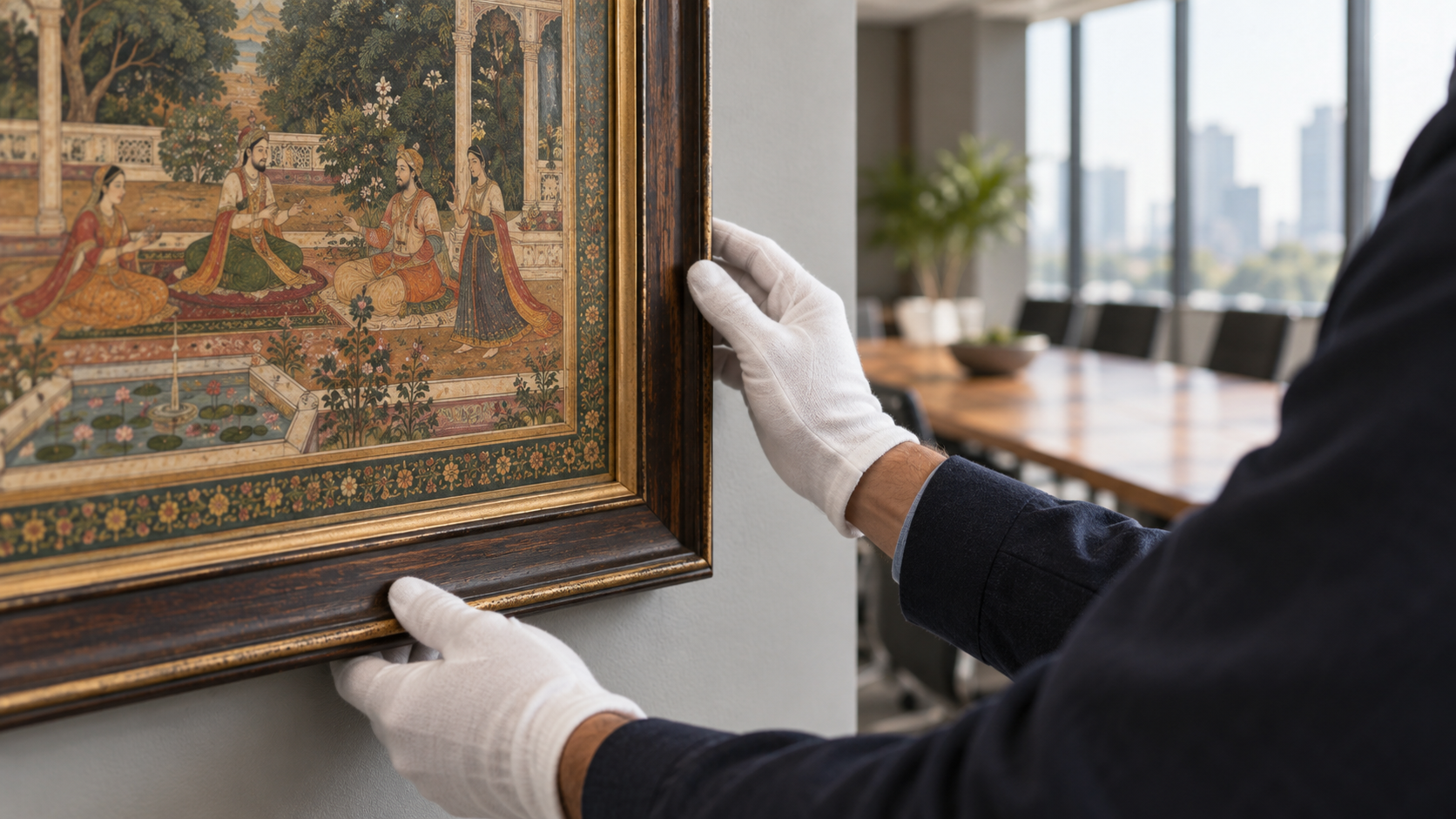
A few minutes thinking room by room usually surfaces the biggest risks: the lobby or reception area, which often gets the most sun exposure of anywhere in the building and is exactly where the best pieces tend to hang; the boardroom, where AC vent placement is worth a specific look; executive offices, where individual choices about blinds and lighting vary and are worth a gentle check-in; and any storage areas, where humidity and proximity to water pipes matter even though nobody's looking at the art day to day. This pairs naturally with the quarterly walkthrough described in our companion piece on office art maintenance.
What You Can Fix vs. What Needs a Professional Assessment
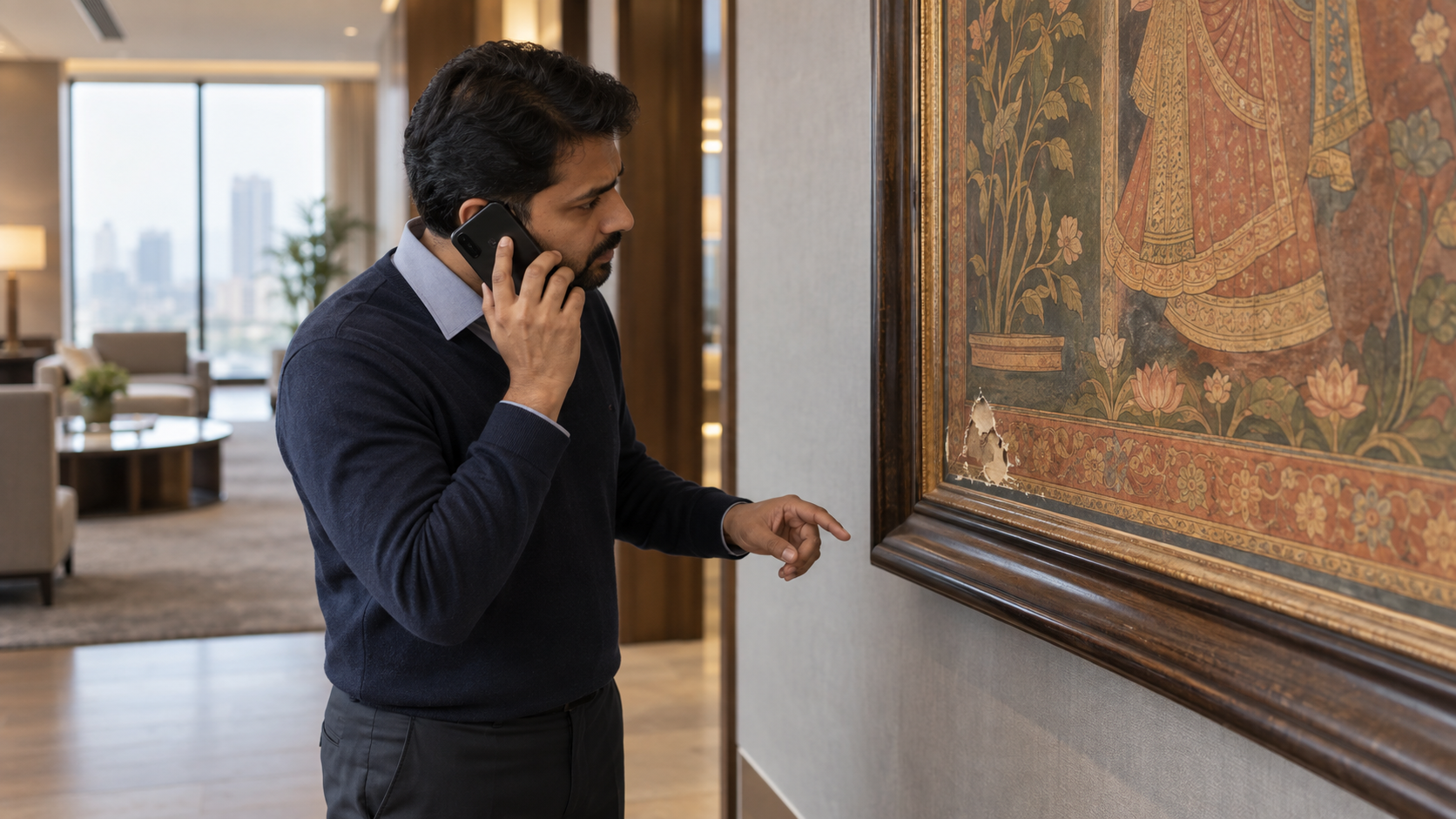
Everything above is well within a facilities team's ability to adjust — repositioning, window treatments, basic monitoring. What isn't: installing proper climate control systems, conducting a formal environmental assessment across a whole collection, or addressing damage that's already visible. If a piece already shows fading, warping, or mould, that's a conservation issue now, not a prevention conversation — worth reading our related piece on when to call a professional conservator rather than continuing to monitor it yourself.
How Turmeric Earth Helps
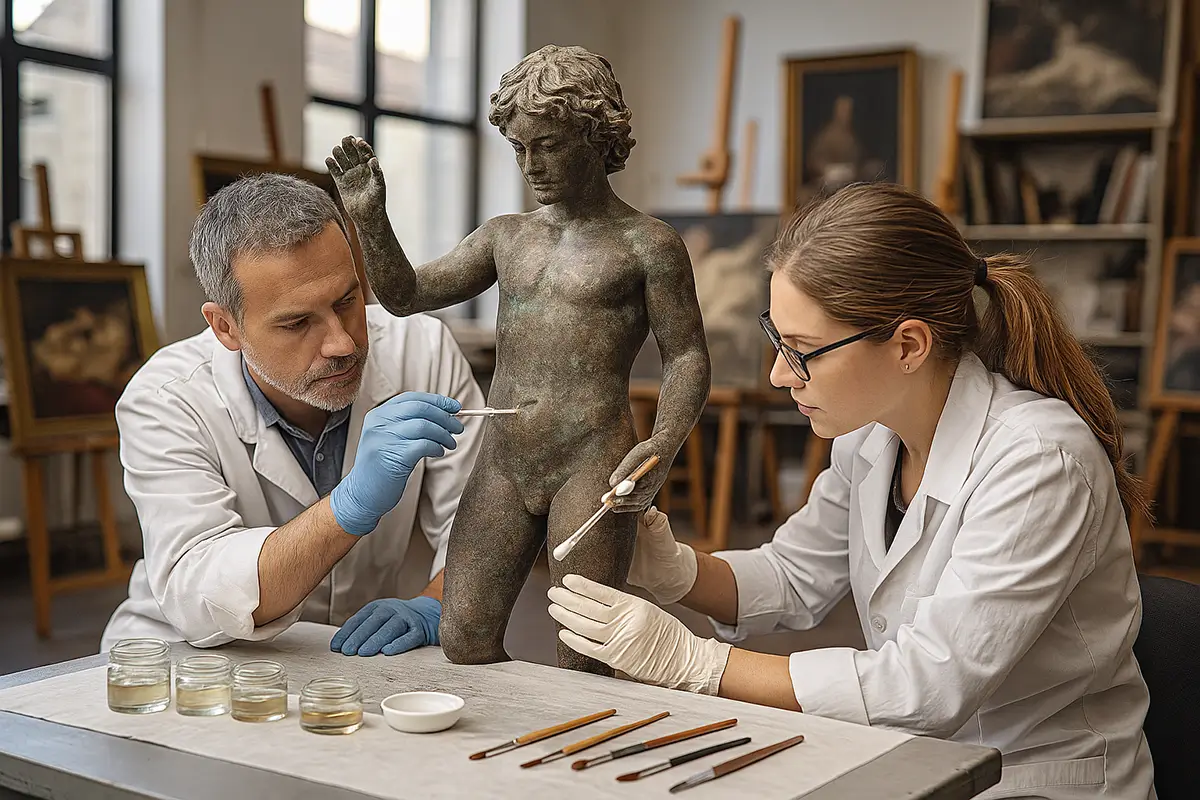
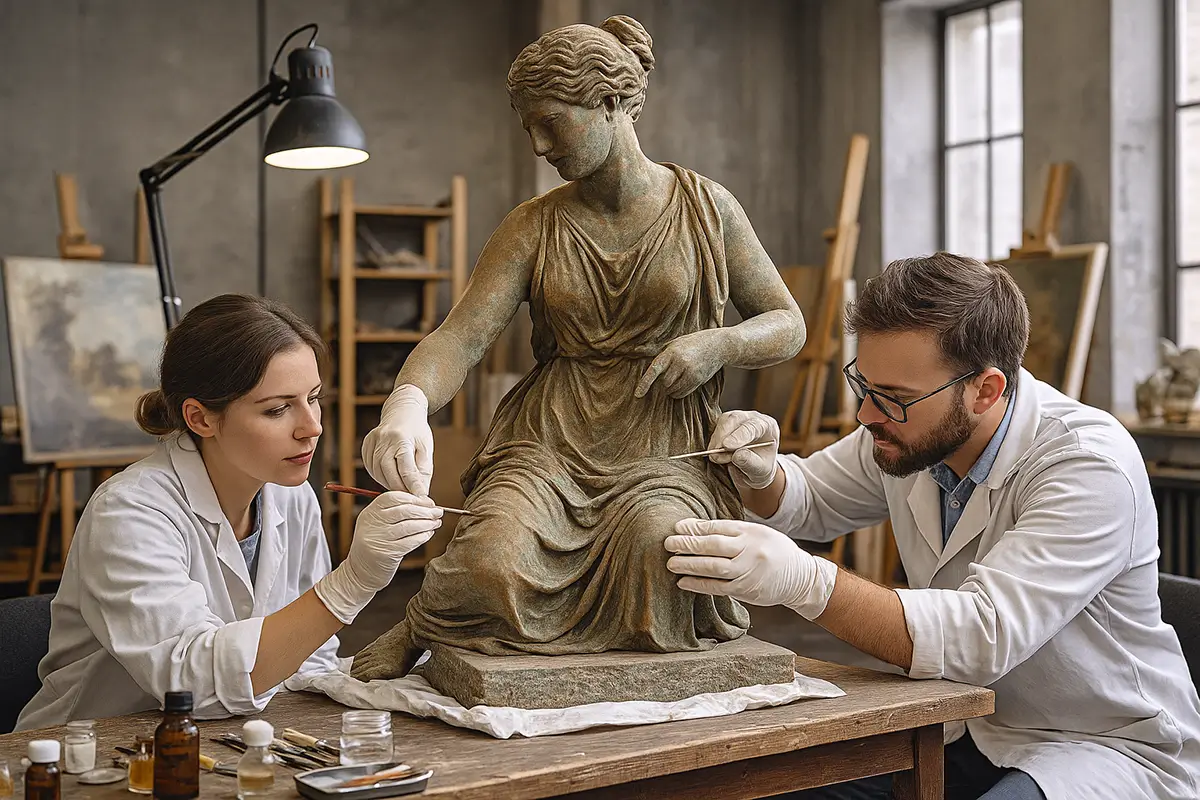
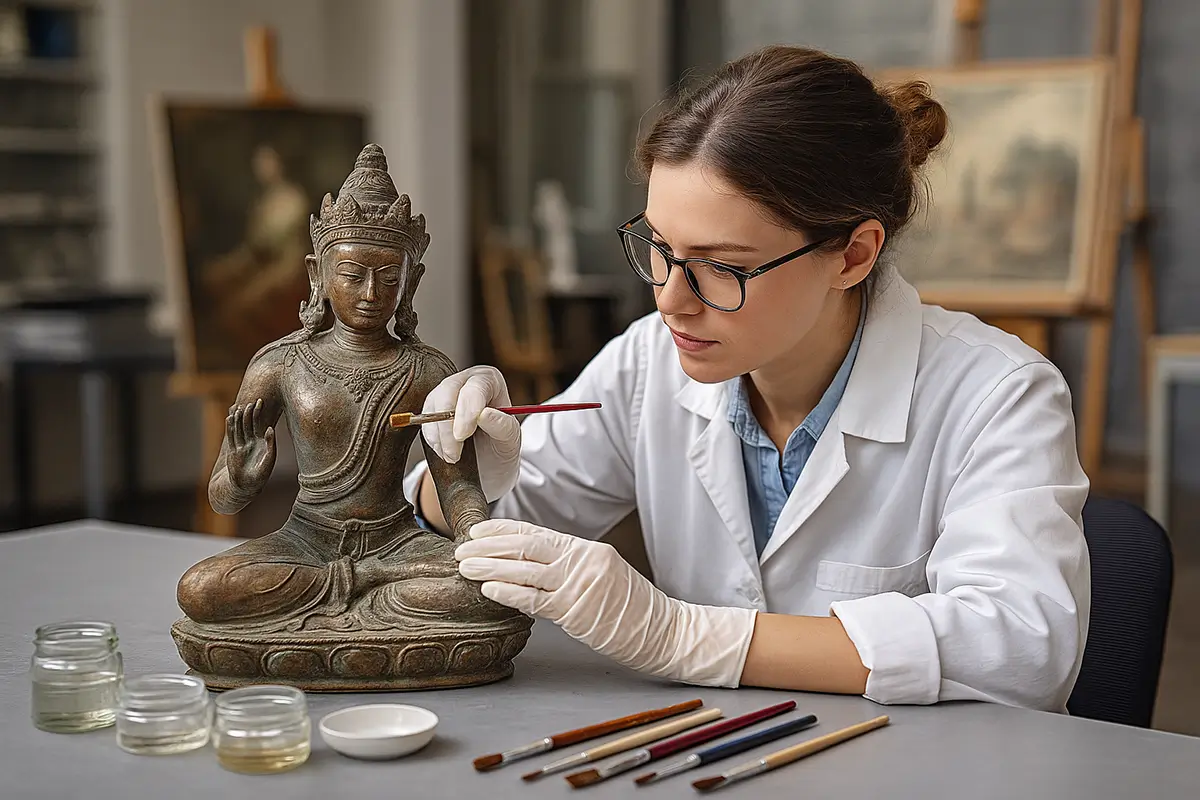
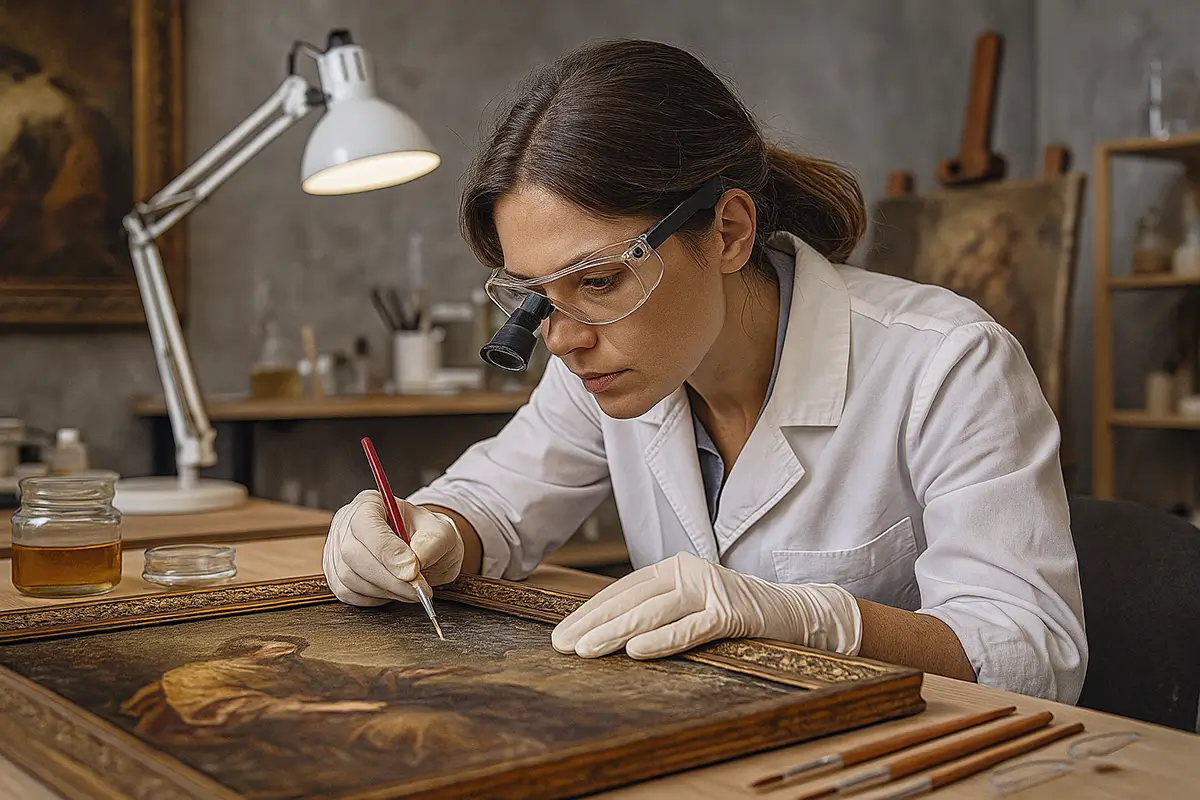
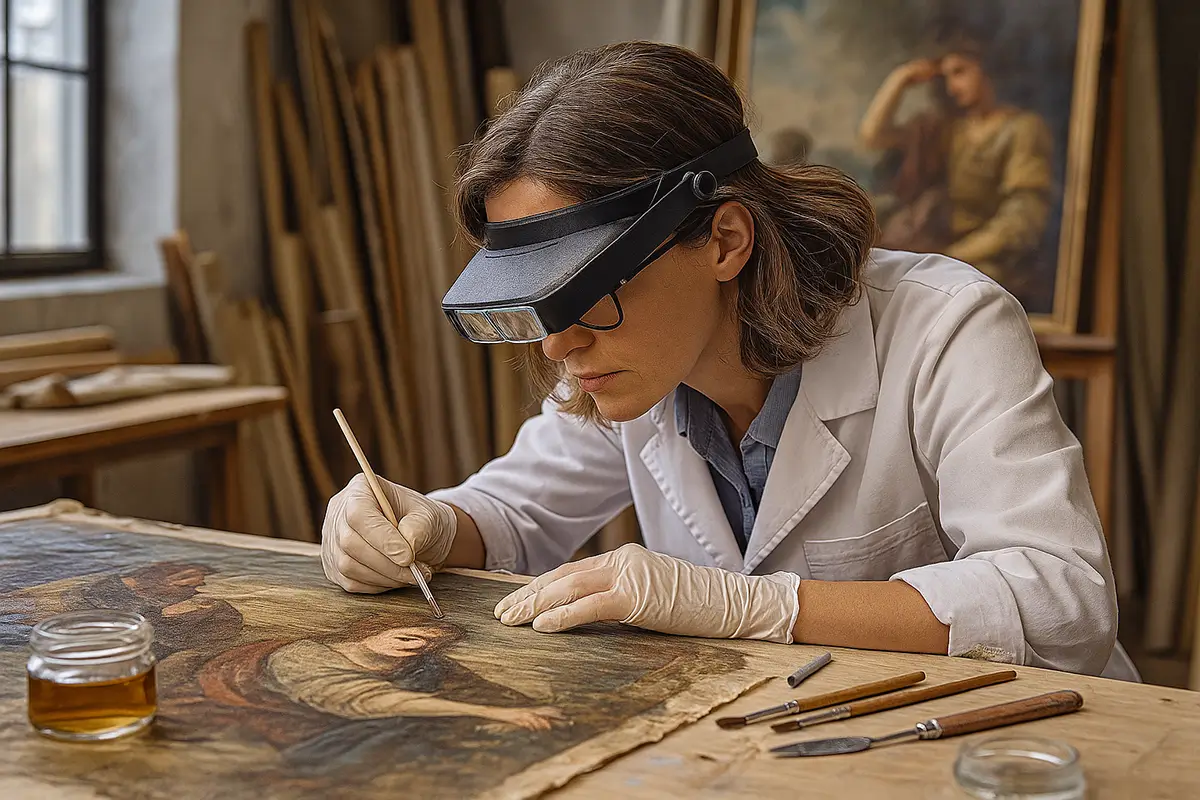
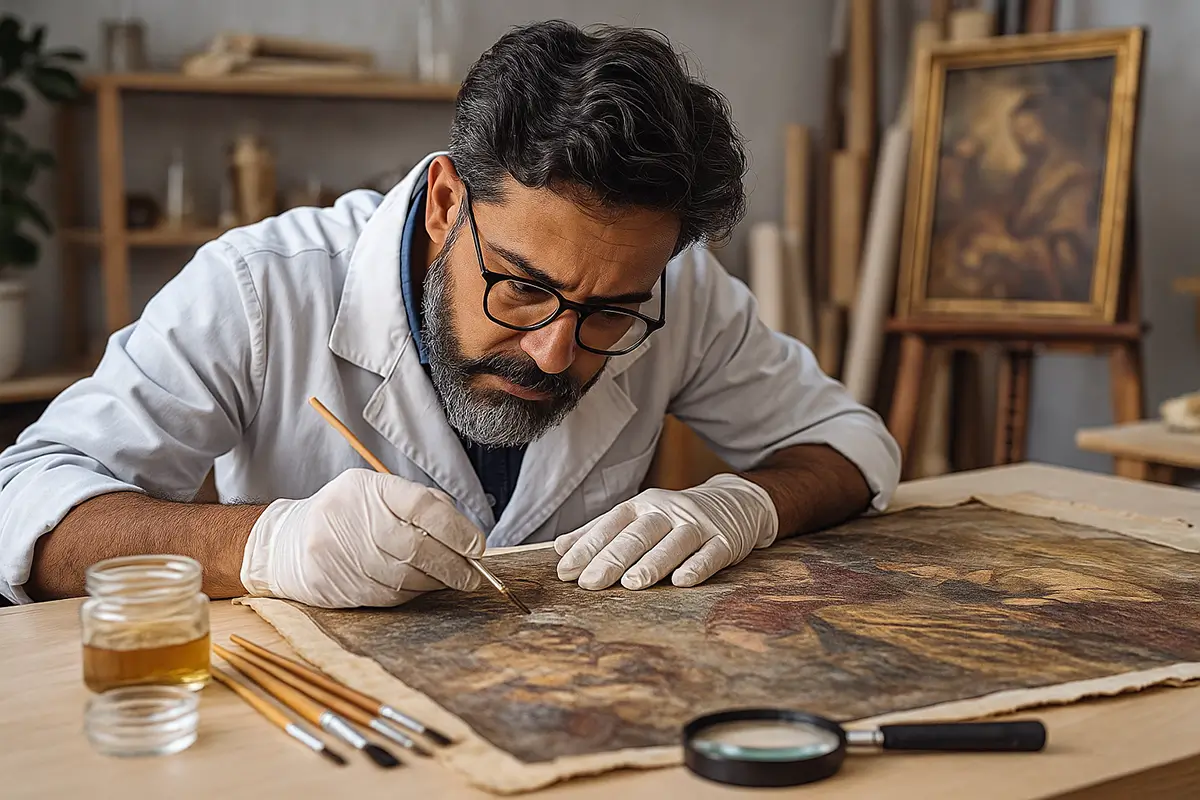
Our conservation team can carry out environmental assessments of office spaces, recommend positioning and protective measures tailored to your specific rooms and collection, and step in directly when a piece needs treatment rather than just prevention. A short assessment now is almost always cheaper than restoration later.
Learn more about our conservation process → turmericearth.com/art-conservation-restoration
None of this requires turning your office into a museum. It requires a bit of awareness about which rooms are working against your collection, and a few adjustments that cost little more than moving a piece a few feet or drawing a blind — done consistently, they do more for a collection's longevity than almost anything else facilities can control.
Frequently Asked Questions
A few questions we hear often on this topic:
Q: What's the ideal humidity range for office art?
General guidance for mixed collections is often cited around 45-55% relative humidity, but the ideal range varies by material — and consistency matters at least as much as hitting an exact number.
Q: Can office AC really damage a painting over time?
Yes — not through any single event, but through repeated cycles of temperature and humidity change near a vent, which stresses canvas, wood, and frames cumulatively over years.
Q: Is LED lighting safer than natural light for art?
Generally, yes, for UV exposure specifically, since good LED fixtures emit little to no UV — but any bright light source used for long periods can still contribute to fading, so positioning still matters.
Q: Should art be avoided in certain rooms entirely?
Rooms with high humidity, direct water sources, or extreme, uncontrolled sunlight — like an unshaded south-facing window — are worth avoiding for valuable or fragile pieces where a better location is available.
Q: How do we know if damage has already started?
Watch for fading, discolouration, warping, cracking, or any visible change from a previous inspection — logged in your catalog, this becomes much easier to spot early.
Q: Does Turmeric Earth do environmental assessments, or only conservation after damage?
Both — a preventive environmental assessment is often the more cost-effective starting point, catching risks before they become active damage.