

For insurance brokers, advising clients on art insurance is not simply about adding artworks to a policy schedule. It begins with one critical question: what is the correct declared value of the artwork or collection?
This question becomes especially important when dealing with private collectors, HNIs, corporate art collections, family offices, institutions, or clients who own paintings, sculptures, antiques, artefacts, collectibles, or other high-value cultural assets. In many cases, these assets may have been acquired years ago, inherited, gifted, restored, relocated, or accumulated over time without updated valuation records.
The result is a common risk: the declared value of the collection may no longer reflect its present market, insurance, or replacement context.
This is where expert-led, AI-augmented art valuation can help insurance brokers bring greater accuracy, confidence, and credibility to client advisory.
Why Declared Value Matters in Art Insurance
Declared value plays a central role in art insurance. It influences the level of coverage, the premium, the underwriting conversation, and the clarity available in the event of loss, theft, fire, transit damage, accidental damage, or natural disaster.
If an artwork is undervalued, the client may be inadequately protected. If it is overvalued, the client may pay higher premiums than necessary, while still facing questions during claim assessment. If the valuation is outdated or unsupported, both the client and the broker may face unnecessary ambiguity at the time of policy issuance or claim review.
Unlike standard movable assets, artworks are not valued only by age, material, or purchase price. Their value can be influenced by several factors, including:
- Artist reputation and market movement
- Medium, dimensions, and subject matter
- Period or year of creation, where available
- Rarity and availability of comparable works
- Provenance and ownership history
- Condition and conservation status
- Exhibition, publication, or institutional relevance
- Broader market demand and comparable sale references
This is why generic estimation or self-declared value is rarely sufficient for serious art insurance planning.
The Broker’s Role Is Becoming More Advisory-Led
Insurance brokers today are expected to do more than connect clients with policies. For high-value clients, brokers increasingly play an advisory role in identifying risk, improving documentation, and helping clients protect assets that may otherwise remain under-assessed.
Art collections are a good example. Many clients own valuable works but may not think of them as assets requiring periodic valuation. A corporate office may have acquired artworks over several decades. An HNI family may own inherited paintings or sculptures. A private collector may have works by important artists but no updated valuation report. A family office may manage multiple residences, each with artworks that need to be documented and insured properly.
In such cases, the broker can add significant value by recommending a professional valuation before insurance coverage is finalized or renewed.
This strengthens the broker’s position in three ways:
First, it allows the broker to advise the client with greater accuracy.
Second, it helps the insurer assess the asset with better documentation.
Third, it reduces avoidable uncertainty if a claim is ever made.
How Expert-Led Art Valuation Supports Better Insurance Advisory
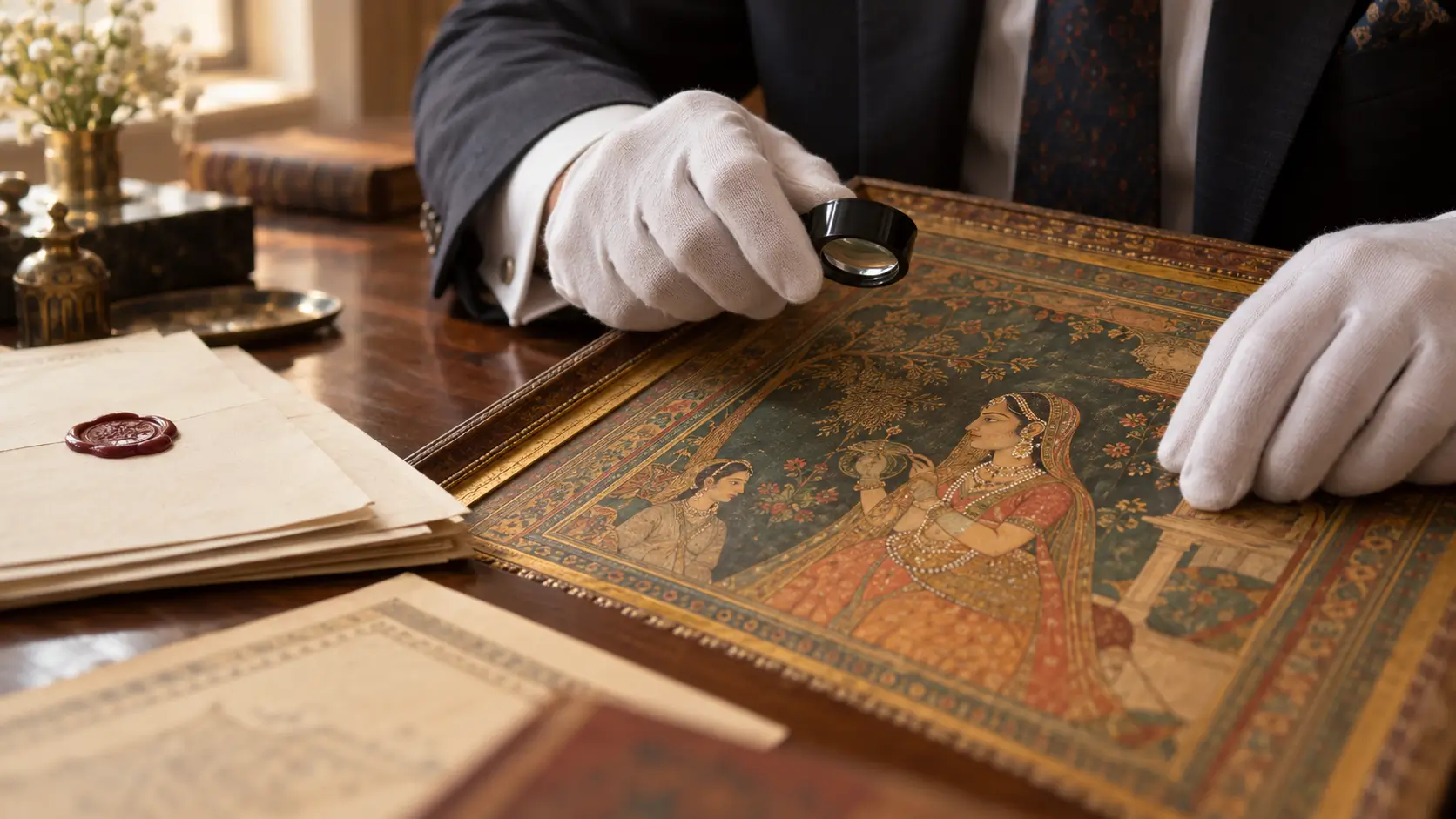
An expert-led art valuation brings structure and credibility to the declared value. It considers the physical attributes of the work, the purpose of the valuation, market context, and valuation-relevant parameters that may not be visible to a non-specialist.
For insurance purposes, this is especially important because a valuation report should not merely mention a number. It should reflect a considered assessment of the artwork or collection, supported by expertise, documentation, and market understanding.
At TurmericEarth, every valuation begins with human expertise. The work is assessed through a proprietary internal valuation process developed over 25+ years of working with insurers, corporates, institutions, government bodies, HNIs, private collectors, and advisors.
This process is supported by 30,000+ proprietary artwork records built over 25 years. These records include artist, medium, dimensions, subject matter, period/year where available, and other valuation-relevant parameters. This depth of internal knowledge helps TurmericEarth assess artworks, antiques, artefacts, collectibles, sculptures, and other evaluated cultural assets with greater context.
For insurance brokers, this means the declared value is not based on guesswork or a generic estimate. It is supported by an expert-led valuation process built over decades.
Where AI-Augmented Benchmarking Adds Value
The new layer in TurmericEarth’s valuation practice is AI-augmented benchmarking.
This does not mean the valuation is AI-generated. It does not mean an automated tool decides the value of the artwork. Art valuation continues to require specialist judgment, cultural understanding, and interpretation of subjective factors.
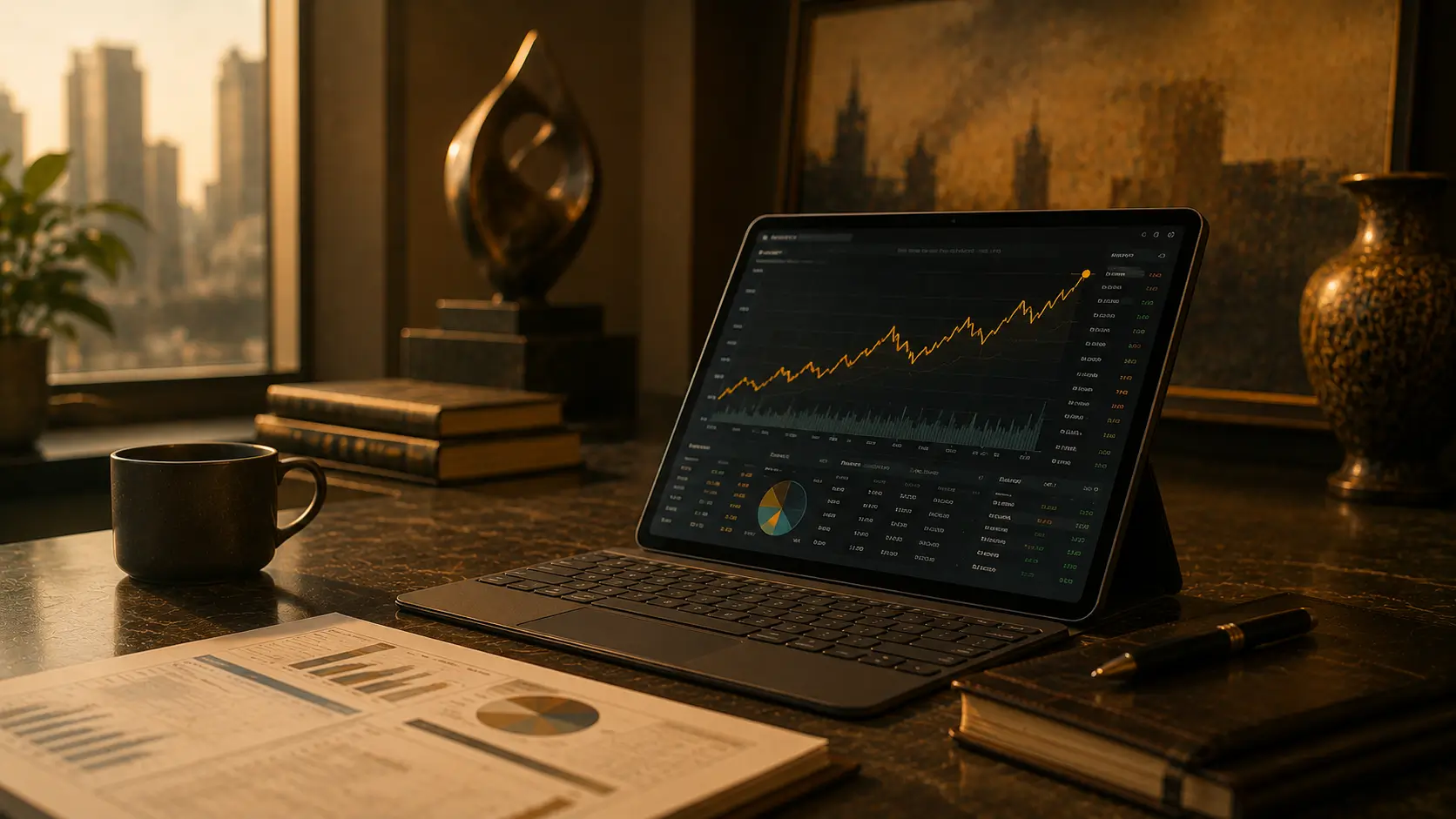
Instead, the AI-augmented layer supports the expert valuation process by helping cross-verify relevant parameters against publicly available global market data and wider art-market intelligence.
In practical terms, this helps strengthen the valuation by adding another level of benchmarking and review. The expert assessment is first developed through TurmericEarth’s internal valuation methodology. It is then cross-checked through an internally built AI-augmented benchmarking model to identify relevant market signals, comparable references, and broader global context.
This is particularly useful in insurance advisory because declared value accuracy depends on both expertise and market validation.
For a broker, this creates a stronger basis for conversations with clients and insurers. The valuation remains expert-led and certified, but it is also strengthened by technology-enabled benchmarking.
Reducing the Risk of Underinsurance and Overinsurance
One of the most practical benefits of AI-augmented art valuation for brokers is the ability to support more reliable declared value conversations.
Underinsurance can leave the client exposed if the insured value is lower than the actual value of the artwork or collection. Overinsurance can lead to unnecessary premium costs and may still invite scrutiny if the declared value is not supported by credible documentation.
AI-augmented benchmarking helps reduce this uncertainty by giving experts a wider frame of reference. It helps ensure that the valuation is not limited only to internal records or individual judgment, but is also cross-verified with wider market intelligence.
For brokers handling HNI clients, corporate collections, or institutional portfolios, this can be a meaningful advantage. It helps them recommend valuation not as an administrative requirement, but as a risk management step.
Why This Matters Before Policy Issuance or Renewal
The best time to value art for insurance is before a policy is issued or renewed — not after a loss event.
When proper valuation documentation is available in advance, the client, broker, and insurer all have a clearer reference point. The insurer can better understand the asset. The broker can advise with more confidence. The client has a stronger record of value, condition, and asset identification.
This becomes especially important when:
- A client is insuring a collection for the first time
- A policy is being renewed after several years
- New works have been added to a collection
- Artworks are being moved, stored, restored, or displayed
- A corporate or family collection has not been recently documented
- A high-value work needs to be added to an existing policy
For brokers, these are useful triggers to recommend professional valuation.
The TurmericEarth Advantage
TurmericEarth is India’s pioneering art valuation company and offers India’s first expert-led, AI-augmented art valuation service.
Its valuation practice combines:
- 25+ years of specialist art valuation experience
- 30,000+ proprietary artwork records
- A proprietary internal valuation process
- AI-augmented benchmarking against publicly available global market data
- Expert review and certification
Across 25+ years of work with insurers, institutions, corporates, and private collectors, TurmericEarth’s valuation reports have been trusted and have stood without dispute.
For insurance brokers, this offers a credible, specialist-backed valuation partner for clients who own valuable art, antiques, artefacts, collectibles, and other cultural assets.
Conclusion
For insurance brokers, accurate declared value is not a small technical detail. It is the foundation of better art insurance advisory.
As art collections become more significant for HNIs, corporates, family offices, and institutions, brokers need reliable valuation partners who can combine expertise, documentation, market understanding, and technology-enabled benchmarking.
AI-augmented art valuation does not replace expert judgment. It strengthens it.
With TurmericEarth’s expert-led process, proprietary database, and AI-augmented benchmarking model, brokers can help clients arrive at more carefully reviewed, better-supported, and more defensible declared values for insurance purposes.
For clients with valuable artworks, antiques, artefacts, sculptures, or collectibles, a professional valuation is not just a formality. It is a crucial step in protecting cultural and financial value.
To learn more, explore TurmericEarth’s expert-led art valuation services.