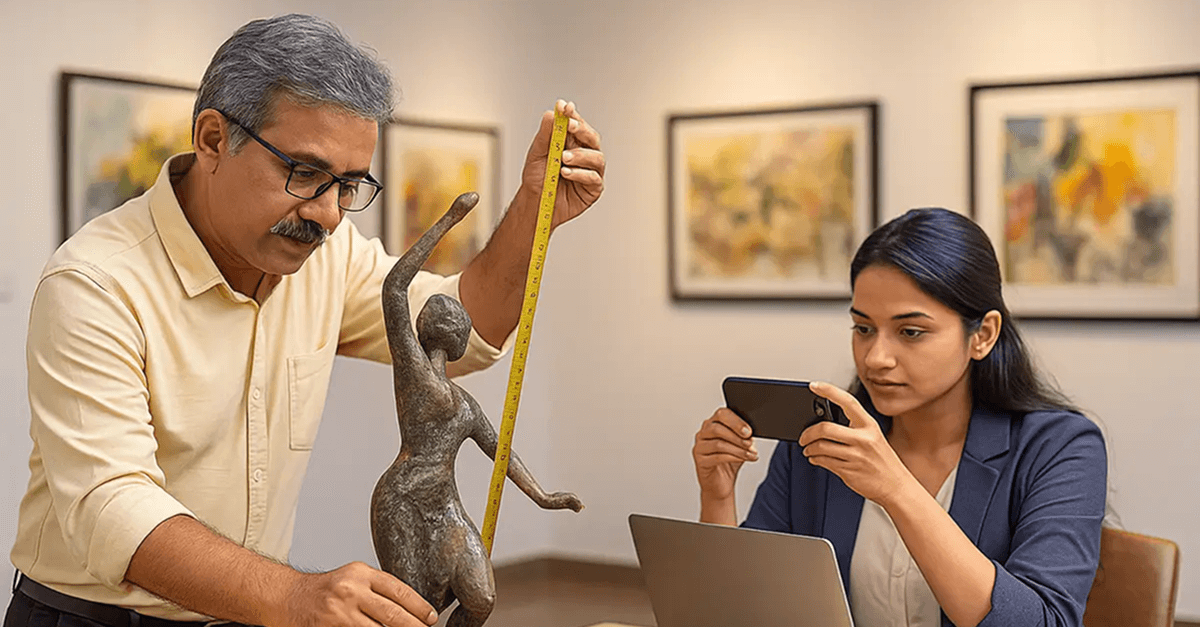


Introduction: Why Cataloging is the Backbone of Art Collection Management
Imagine walking into a library where none of the books have labels, no author names, and no system of order. You might stumble upon a gem by accident, but you’d never truly know what the library holds. Unfortunately, this is how many art collections in India are managed — scattered, undocumented, and vulnerable.
Art cataloging solves this problem. It is the process of documenting artworks in a structured manner, creating a reliable record of their identity, history, and value. In India, where art collecting is on the rise among corporates, high-net-worth individuals, and institutions, cataloging is no longer optional — it is essential for protecting both cultural and financial assets.
This guide will walk you through the step-by-step process of cataloging an art collection in India, highlight why it matters, and show how professional cataloging safeguards the longevity and value of artworks.
What is Art Cataloging?
Cataloging is the systematic documentation of artworks within a collection. It goes beyond simply writing down an artist’s name or a painting’s title. A proper catalog entry records:
- Artist, title, medium, dimensions
- Year of creation and acquisition details
- Provenance (ownership history)
- Condition report (current state, past damage, restorations)
- Exhibition or publication history
- Insurance/valuation details
- High-quality images of the work
In essence, cataloging turns an informal collection into a structured art inventory — a tool that supports everything from insurance to exhibitions and legacy planning.
Why Cataloging Matters in the Indian Context
1. Preserving Value
In India’s humid climate, artworks are at constant risk of damage. Without condition records, it’s impossible to prove when and how damage occurred, which can reduce value drastically. Cataloging ensures there’s always a baseline record.
2. Facilitating Insurance & Valuation
Insurers and valuers require detailed documentation to assess premiums, claims, and market worth. Without it, owners risk underinsurance or disputes.
3. Preventing Loss and Theft
A documented collection makes it harder for works to be stolen or sold without trace. Digital records with images and provenance data serve as proof in case of disputes.
4. Supporting Legacy & Estate Planning
Cataloging ensures that heirs or successors inherit not just artworks but also the knowledge of their significance, authenticity, and value.
5. Exhibitions & Loans
Lenders and curators require detailed catalogs before displaying or borrowing works. Collections without catalogs miss out on public visibility opportunities.
In short, cataloging is not just administration — it is an investment in the future of your collection.
Step-by-Step Guide to Cataloging an Art Collection in India
Step 1: Conduct a Collection Survey
The process begins with a comprehensive survey. Every artwork in the collection is located, examined, and logged. This includes pieces that might be tucked away in storerooms or corporate storage facilities.
Key output: A preliminary list of works with rough details (artist, medium, size, condition notes).
Step 2: Photography & Visual Documentation
High-quality photography is the cornerstone of cataloging. Each work is photographed under proper lighting, capturing:
- Full view of the artwork
- Close-ups of signatures, inscriptions, or details
- Backside or reverse images for framing, stamps, or labels
These images serve as legal proof in case of theft, damage, or insurance claims.
Step 3: Metadata Recording
Metadata is the structured information about each work. It is divided into:
- Descriptive data: Artist, title, medium, dimensions, style.
- Provenance data: Ownership history, acquisition source.
- Condition data: Cracks, discoloration, previous restorations.
- Administrative data: Insurance records, valuation, exhibition history.
Metadata ensures every work has a documented “biography.”
Step 4: Assigning Inventory Numbers
Each artwork is assigned a unique catalog number. This prevents duplication and confusion — especially important in corporate collections where hundreds of works may be spread across multiple offices.
Step 5: Condition Reporting
A condition report is prepared for each work, capturing its physical state at the time of cataloging. This includes:
- Structural integrity (canvas, frame, paper, etc.)
- Surface condition (scratches, stains, fading)
- Signs of pest or water damage
These reports are essential for valuation, insurance, and conservation planning.
Step 6: Linking Valuation & Insurance Data
Catalog entries are integrated with valuation reports. This ensures each artwork’s financial value is clearly documented and updated periodically. Insurance companies also require such records for coverage and claims.
Step 7: Creating the Catalog (Digital & Print)
Today’s standard is digital cataloging systems with searchable fields, cloud storage, and easy access. However, many collectors also prefer printed catalogs as tangible records — sometimes even designed as coffee-table books.
A hybrid approach is often best: digital records for practical use, printed catalogs for legacy and presentation.
Common Mistakes in Cataloging (and How to Avoid Them)
- Incomplete Records: Skipping details like acquisition date or condition history makes catalogs less useful.
- Poor Photography: Low-resolution images or bad lighting reduce credibility and usefulness.
- No Digital Backup: Paper-only catalogs are vulnerable to loss. Always create a digital archive.
- Unverified Provenance: Unverified ownership claims can create legal and valuation disputes later.
- Lack of Standardisation: Each entry must follow the same format to maintain consistency across the collection.
Professional cataloging eliminates these pitfalls through structured, standardised processes.
The Role of Technology in Art Cataloging
Modern cataloging is tech-enabled. Tools include:
- Cataloging software with cloud access
- Blockchain-based provenance records for high-value works
- AI image recognition for comparing condition over time
- Digitisation platforms that integrate cataloging with archival systems
For Indian collectors, this shift means greater accessibility and security.
Corporate & Institutional Cataloging in India
Large corporations in India are increasingly cataloging their art holdings — not just for insurance but also as part of their brand identity and cultural engagement strategies.
Examples:
- A financial services company cataloged 200+ artworks across offices, linking them to insurance and rotation schedules.
- A multinational firm digitised its collection, creating both an internal portal for employees and a public-facing catalog to showcase its cultural commitment.
For institutions like museums, cataloging is fundamental to academic credibility and global collaborations.
Benefits of Professional Art Cataloging
- Financial Security: Enables proper insurance coverage.
- Operational Efficiency: Makes collections easy to manage and exhibit.
- Cultural Stewardship: Ensures artworks are recorded for future generations.
- Market Advantage: Well-documented works attract higher confidence from buyers, insurers, and curators.
Conclusion: Cataloging as Cultural Responsibility
Art cataloging is not just paperwork. It is about respecting the cultural, historical, and financial significance of every piece you own. Without it, collections risk being undervalued, mismanaged, or even lost to time.
If you are a collector, corporate, or institution looking to bring order and security to your collection, explore our Art Cataloging Services. At TurmericEarth, we combine meticulous documentation with international best practices to ensure your collection is cataloged, preserved, and future-ready.